


More clothing doesn’t always make a better cold-weather padel outfit. You might feel chilled before the first serve, then overheat once rallies intensify. Rather than piling on bulky garments, choose cold weather padel clothing layers you can adjust without compromising movement.
If you’re deciding what to wear for a cold-weather match, plan for the shift from waiting to playing. Your outfit should feel comfortable between points while allowing excess heat to escape as you move. When you remove a layer, the rest should still work on court.
This guide explains how to build a practical layering system for changing conditions, from your playing top to removable outerwear. You’ll learn what to keep on, when to take a layer off, and what to check before buying, so you can adjust your outfit without feeling weighed down.
Key Takeaways
- Build cold weather padel clothing layers around removable garments, rather than relying on one bulky outfit.
- Choose layers for distinct roles: managing moisture, adding warmth, or shielding you from the weather.
- Adjust your outfit to the conditions, with different priorities for exposed outdoor, damp or windy, and indoor courts.
- Check your range of movement and reassess warmth during warm-up so you can add or remove layers as needed.
- Compare a playing shirt, gilet, jacket, or hoodie tee by comfort, fit with other layers, and verified weather suitability.
Cold-weather padel clothing layers: why one heavy outfit is not enough
You feel cold while waiting to play, so a thick top seems like the obvious fix. Then the rallies begin. You move, accelerate and reach for shots, and that same top can quickly feel too warm or restrictive. Cold weather padel clothing layers address the change in pace with garments you can adjust, instead of asking one heavy layer to do every job.
A layering system combines garments with different purposes. A layer next to your skin can help manage moisture, another can add warmth, and an outer layer may provide weather protection if its details support that use. As the overview of Winter clothes describes, layering is a practical way to dress for cold conditions. On court, the benefit is being able to adapt.
Padel involves pauses as well as bursts of movement. You may cool down between games, then heat up during a demanding rally. A removable layer gives you an option without carrying unnecessary bulk through every shot. The right combination depends on the conditions, how exposed the court is, your comfort and how intensely you play.
What does a padel layering system include?
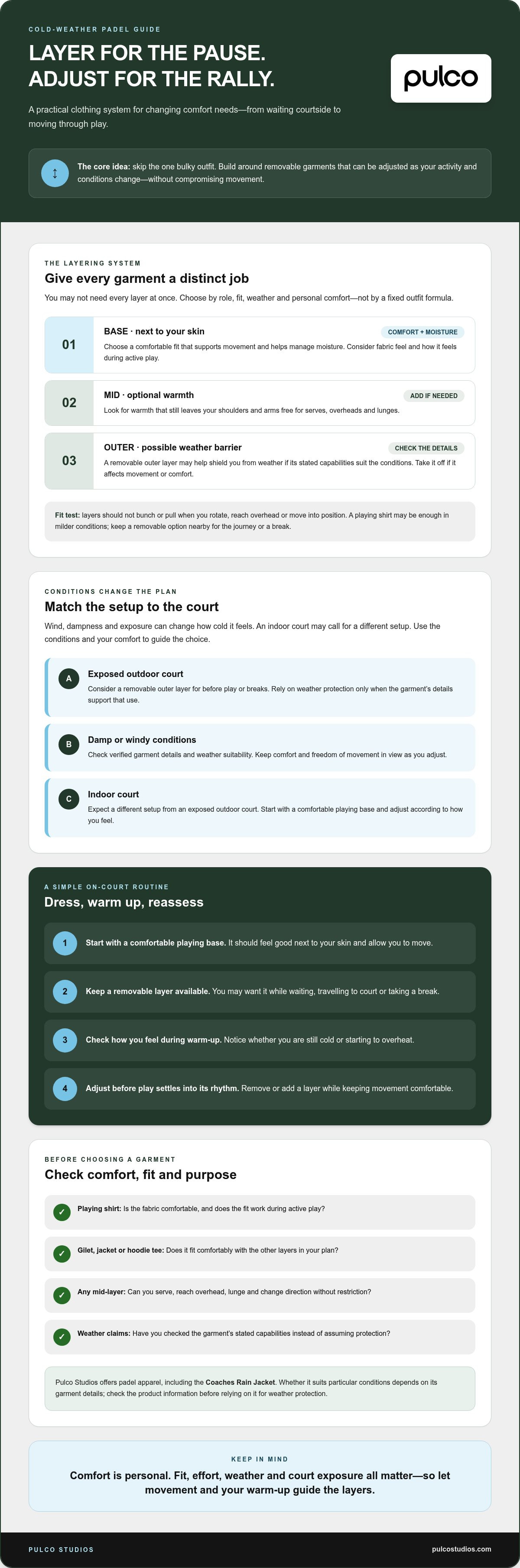
Think about the job each garment needs to do, rather than aiming for a set number of layers. A base layer sits next to your skin and should feel comfortable while you move. A mid-layer is an optional way to add warmth. An outer layer may provide another barrier against the weather, depending on its stated capabilities. You might not need all three at once.
Check how the pieces fit together. Layers shouldn’t bunch up or pull when you rotate, reach overhead or move into position. In milder conditions, a playing shirt may be enough. For the journey to court or a break between games, keep a removable option nearby.
Why can cold-weather padel feel different during a match?
Standing still before a match and moving through a rally create different comfort needs. At rest, you may want another layer. As play intensifies, you generate more heat, and extra clothing can become uncomfortable. Wind, dampness and an exposed court can affect how cold conditions feel. An indoor court may call for a different setup.
Use your comfort as a guide, not a fixed outfit formula. Start with a comfortable playing base, then choose removable layers to suit the forecast and court exposure. During warm-up, notice whether you’re still cold or starting to overheat. This gives you a chance to adjust before the match settles into its rhythm.
How each cold-weather padel layer supports comfort and movement
Each layer has a different job. The base sits next to your skin, a mid-layer can add warmth, and an outer layer may help shield you from the weather. Choose a combination that supports the way you play, not just how the court feels before the first serve. A garment that feels comfortable while standing may become restrictive during an overhead or a quick change of direction.
For a broader perspective on dressing for exercise in cold conditions, see how UBMD Orthopaedics & Sports Medicine discusses layering to help prevent injuries that can be caused by the cold. No fabric or garment guarantees that every player will stay warm and dry. Fit, effort, weather and personal comfort all matter.
| Layer | Purpose | Consider |
|---|---|---|
| Base | Comfort next to skin; helps manage moisture | Fabric feel, fit and how it feels during active play |
| Mid | Optional added warmth | Shoulder and arm freedom for serves and overheads |
| Outer | Potential weather protection | Conditions and verified garment details |
Base layers: manage moisture without overclaiming
A comfortable, close fit helps a base layer sit against your skin without pinching or limiting your swing. Sportswear fabrics differ in feel and care needs, so check the garment label and choose what suits you. Cotton may feel different once damp, which is worth considering if you tend to sweat during intense rallies. There’s no universal best fabric.
Mid and outer layers: add warmth or weather protection
A mid-layer is optional. Look for one that adds the warmth you want while leaving your shoulders and arms free for serves, overhead shots and lunges. A removable outer layer can be useful before play or during breaks, especially at an exposed court. Take it off if it interferes with your movement or comfort.
Pulco Studios offers padel apparel including the Coaches Rain Jacket. Whether it suits particular conditions depends on the garment’s details, so check the product information before relying on it for weather protection. Browse padel playing shirts and outerwear with your layering plan in mind.
Before settling on a combination, test a serve, overhead reach, lunge and quick change of direction. Cold weather padel clothing layers should let you move through each action without excess fabric pulling or bunching.
Which cold-weather padel layers suit wind, damp, and indoor courts?
Choose your outfit for the court you’ll actually play on, not just the weather outside. Wind, dampness, airflow and time spent waiting can all affect how clothing feels. Use the comparison below as a starting point, then adjust for your comfort and the venue’s guidance.
| Conditions | Layering priority | What to consider |
|---|---|---|
| Exposed outdoor court | Removable layer for waiting and breaks | How much the court is sheltered from wind |
| Windy or damp conditions | Assess weather protection separately from warmth | Check the garment’s stated capabilities before relying on it |
| Indoor court | Adapt to venue temperature and airflow | Keep an extra layer nearby for arrival or pauses |
What should you change for an exposed or windy outdoor court?
Waiting on an exposed court can feel different from moving through a rally. Keep a removable layer available for arrival and breaks, and consider how sheltered the venue is. One outdoor court may be protected by nearby structures, while another is open to the elements.
Damp conditions need a separate check. Warmth and rain protection aren’t the same thing, and a garment’s name alone doesn’t confirm what weather it can handle. Review the product details before relying on it for rain or wind. Adjust or remove outerwear if it pulls across your shoulders or limits your reach.
How should layers change for indoor padel?
Indoor doesn’t always mean warm. Venue temperature and airflow vary, and you may feel cool before play or during a pause, even if the court feels comfortable once you’re moving. Follow venue guidance and, if conditions allow, start with fewer layers. Use your warm-up to judge your comfort instead of guessing from the building alone.
Keep a removable option close by for arrival, rest periods or a change in comfort. If you get too warm during play, take it off. If you cool down during a break, put it back on. A flexible setup is more useful than assuming one fixed outfit suits every court.
Use the table to plan cold weather padel clothing layers around the conditions, then make a final adjustment based on movement and comfort. Wind exposure, dampness and indoor airflow are useful clues, not guarantees of how you’ll feel.
How to dress for a cold-weather padel match, step by step
A reliable match-day outfit starts with the conditions, then gets tested in motion. Build your cold weather padel clothing layers around the court and your comfort, rather than a fixed formula. This prepares you for the wait before play and lets you move freely as the pace picks up.
Build your outfit before leaving for the court
First, check whether you’re playing indoors or outdoors. For an outdoor match, consider wind exposure and whether damp weather is expected. For an indoor venue, check any guidance it provides and consider how cool it may feel before you’re active.
Choose a comfortable playing base, then bring a removable layer for the journey, warm-up or breaks. Test the outfit instead of judging it in front of a mirror. Rotate your shoulders, reach overhead as if serving, lunge and take a few quick steps. If fabric pulls across your shoulders or catches at your hips, it may distract you during play.
- Conditions: Check the venue and forecast, including wind or dampness.
- Comfort: Make sure the base feels good against your skin.
- Movement: Test your reach, rotation, lunges and quick steps.
- Flexibility: Bring a layer you can remove or put back on.
For more on choosing performance-focused garments, see Technical Padel Apparel: Engineering Elite Performance on the Court.
Adjust layers through warm-up, rallies, and breaks
If conditions call for it, begin your warm-up with a removable layer. As your effort rises, pay attention to warmth, sweat and freedom of movement. If you feel too warm or your clothing restricts your swing, take the layer off before it becomes a distraction. If you’re still cold, add it back when play pauses.
Use breaks to reassess: Are you comfortable? Can you move freely? Do you want this layer on for the next stretch of play? Small adjustments can help you stay focused rather than waiting for discomfort to build.
Choose padel clothing that fits your plan, and check the garment details before relying on it for a specific condition. Explore Pulco Studios padel apparel and outerwear as you put together your match-day outfit.
Choose cold-weather padel clothing that fits your layering plan
The right garment fits the role you need, works with the rest of your outfit and lets you play freely. Before choosing, consider how it feels against your skin, whether it fits comfortably over other layers, and whether the product information supports using it in the conditions you expect. A garment type or name alone doesn’t confirm its warmth or weather protection.
Movement is essential. Check that clothing doesn’t pull across your shoulders during a serve, catch when you reach overhead or restrict your legs in a lunge. Try each garment with the other layers you plan to wear, not in isolation. If wind or rain protection matters, verify those details before relying on a piece outdoors.
What should you check before choosing padel outerwear?
Start with fit and intended use. Wear the layer over your planned playing top, then rotate your shoulders, reach, swing and move laterally. Notice any uncomfortable bunching or resistance. Next, review the garment information for stated weather suitability and fabric details. Don’t assume a jacket provides rain protection, or that a gilet supplies a particular level of warmth, without confirmation.
For more detail on apparel decisions, read Engineering the Edge: The Definitive Guide to Technical Padel Outerwear. Use it alongside the product information, then assess each item against your court conditions and movement needs.
How can Pulco apparel fit into a considered kit?
Think of garment categories as options, not fixed roles. A playing shirt may work as your base if its fit and fabric feel comfortable for your play. A long-sleeve cotton hoodie tee could be an additional layer if its details and fit suit your conditions. The Coaches Rain Jacket and Black Vent Gilet are outerwear options to assess. Check their current descriptions before assigning either a specific weather-protection or warmth function.
- Comfort: Does it feel good against your skin or over another layer?
- Movement: Can you serve, reach and change direction without restriction?
- Compatibility: Does it fit smoothly with your planned outfit?
- Suitability: Do verified product details match the conditions you expect?
Use these checks to make cold weather padel clothing layers work as a coordinated kit, rather than choosing by garment name alone. Explore Pulco Studios padel apparel and compare the product details with your layering needs.
Build a Layering Plan That Moves With You
Effective cold-weather padel clothing layers aren’t necessarily bulky. They’re garments you can adjust as conditions and effort change. Start with a comfortable playing base, add warmth or weather protection only where needed, and check that each piece lets you serve, reach and move without restriction.
Keep the court and the pauses between rallies in mind. Wind, dampness, indoor airflow and personal comfort all affect which combination feels right. During warm-up, reassess how you feel. Add or remove a layer before discomfort distracts you, and check product details before relying on a garment for a specific weather role.
Pulco Studios specializes in technical apparel for padel players, with playing shirts and outerwear in its range. Consider your layering needs, then choose pieces that suit your movement and conditions. Explore Pulco Studios padel apparel.
Make the adjustment that feels right for your conditions, then step onto court ready to play.
Frequently Asked Questions
What should I wear to play padel in cold weather?
Wear a comfortable playing base with optional layers you can adjust as conditions and effort change. Choose your outfit based on whether the court is indoors or exposed to wind or damp weather, then check that you can serve, reach overhead, lunge and move freely. A removable layer can help during arrival and breaks. No single outfit suits every player or court.
How many layers should I wear for cold-weather padel?
There’s no required number. Think about garment roles: a base next to your skin, an optional layer for warmth, and an outer layer if the conditions call for weather protection. You may not need every role, but you might want a layer nearby for pauses. Let court exposure, your comfort and how intensely you play guide your choice.
Can I wear a hoodie while playing padel in cold weather?
Yes, if it feels comfortable and doesn’t restrict your swing or movement. Test shoulder rotation, overhead reach and quick steps while wearing it, and consider whether you’ll want to remove it as play intensifies. Pulco Studios sells the Racket Man Long Sleeve Cotton Hoodie Tee. Check its current product details and fit before deciding whether it suits your conditions and layering plan.
What is the best base layer for cold-weather padel?
The best base layer is one that feels comfortable next to your skin and works for your effort level. Sportswear fabrics differ in feel and care needs, so check the garment information and consider how it feels during movement rather than assuming one fabric is right for everyone. A comfortable fit matters. If you tend to sweat during rallies, notice how the fabric feels as you warm up.
Should I wear a jacket while playing padel outdoors in winter?
A jacket can be useful before play or during breaks, and may suit some outdoor conditions while you’re active. Whether to keep it on during rallies depends on comfort, movement and the garment’s verified details. Check that it allows a full swing, and don’t assume it provides rain or wind protection unless the product information confirms its suitability. Adjust as conditions and effort change.
How do I stop overheating in cold-weather padel clothing?
Choose cold weather padel clothing layers you can remove or add as your effort changes. Start with a comfortable playing base, then use warm-up to check whether you’re heating up, sweating or feeling restricted. Remove an optional layer before it disrupts movement or concentration, and reassess during breaks. Don’t dress only for standing still, since rallies can change how warm you feel.
Is a gilet useful for cold-weather padel?
A gilet may work as an optional layer for some players, depending on the conditions, fit and verified garment details. Try it over your playing top and check shoulder rotation, overhead reach and racket movement. Pulco Studios offers the Black Vent Gilet. Review its current product information before assigning it a particular warmth or weather-protection role in your outfit.
