


A match isn’t the only test your padel clothes face. Damp gear left in a bag, harsh washing and fabric softener can all wear them down. Learning how to make padel clothes last longer starts with a simple routine: air them out soon after play, wash them inside out in cold water with detergent, skip fabric softener and let them air-dry.
A quick wash isn’t the only thing that matters. What you do before and after washing counts, too. Don’t leave sweaty kit compressed in your bag, and follow the care label to help protect the fabric, colour and shape.
This guide explains how detergent and laundry habits affect performance gear, why airing out sweaty clothes matters and where cotton fits. Practical care helps keep your kit ready for the next rally, while choosing the right fabric can make it more comfortable on court.
Key Takeaways
- Choose a detergent suited to performance fabrics, and skip fabric softener to help preserve moisture management.
- Take damp gear out of your bag promptly and let it dry fully in a ventilated, shaded spot.
- Reduce laundry wear by washing technical pieces with lightweight athletic clothing and following garment care labels.
- Consider where cotton fits in your kit: its moisture retention can make it feel heavier during play.
1. Choosing detergent and avoiding fabric softener
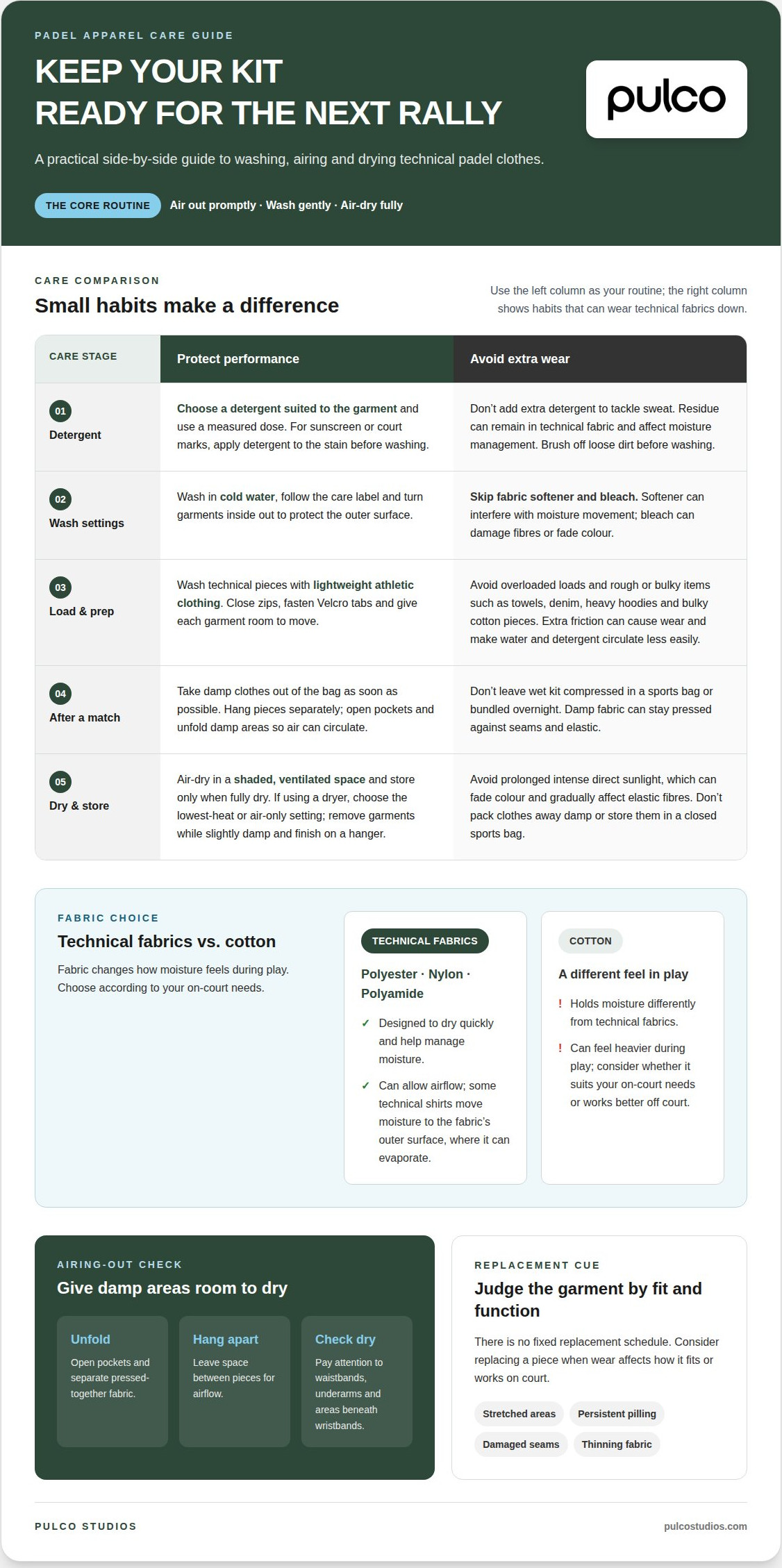
Knowing how to make padel clothes last longer starts with the care label and a measured dose of detergent. Choose a detergent suited to the garment, and don’t add extra to tackle sweat. Residue can remain in technical fabric and affect moisture management. For sunscreen or court marks, apply detergent to the stain before washing. Brush off loose dirt first so grit doesn’t spread through the load.
Skip fabric softener on moisture-wicking padel clothing. Its coating can interfere with how technical fabrics move moisture away from your skin. Avoid bleach, which can damage fibres or fade colour. Wash in cold water and follow the care label. If detergent residue lingers, a small amount of white vinegar in the rinse cycle may help. Never mix vinegar with bleach or other cleaning chemicals.
Polyester and other technical fabrics can dry quickly and help manage sweat during play. Choose lightweight, breathable materials that allow a full reach and racket swing. Durable fabric and solid construction can keep garments in rotation longer, reducing the need for early replacement. Cotton holds moisture differently, so consider whether it suits your on-court needs or works better off court.
There’s no fixed replacement schedule. Replace a garment when stretched areas, persistent pilling, damaged seams or thinning fabric affect its fit or function. If you’re considering how to make padel clothes last longer, look for these changes rather than replacing a piece simply because you’ve worn it.
For polyester, elastane and compression gear, follow the care label, wash in cold water and skip softener. Turn garments inside out to protect the outer surface, and air-dry them when possible.
Fabric choice also affects comfort during play. Polyester blends and technical fabrics are designed to manage moisture and dry faster than cotton. Lightweight, breathable technical T-shirts can help manage moisture and feel comfortable, while moisture-wicking tops help draw sweat away from the skin during intense rallies.
Polyester and nylon are commonly used in padel clothing because they dry quickly and allow airflow. Polyester or polyamide technical shirts move moisture to the outside of the fabric, where it can evaporate.
2. Airing out sweaty gear after a match
After a match, take shirts, shorts, leggings and other damp layers out of your sports bag as soon as possible. Sweat trapped in compressed fabric leaves it damp and can keep moisture against seams and elastic. Hang each piece separately so air can circulate around it. Don’t leave wet kit bundled overnight, even if you plan to wash it the next day.
Open pockets and unfold garments so damp areas aren’t pressed together. Waistbands, underarms and the fabric beneath wristbands can hold moisture longer than the body of a shirt. Spread shorts and leggings over a hanger or drying rack instead of stacking them. This gives air access to the fabric and helps each piece dry evenly.
Air-dry padel clothes in a shaded, ventilated space. Prolonged exposure to intense direct sunlight can fade colours and gradually affect elastic fibres. Leave space between garments for airflow, and make sure each piece is fully dry before packing it for the next session. If you’re moving between matches, use a separate bag for used gear to keep damp fabric away from clean layers.
How should you dry padel clothes without damaging elastic or technical fabrics? Air-dry them on a rack or hanger, away from prolonged direct sunlight. If you use a dryer, choose its lowest-heat or air-only setting, then remove garments while slightly damp and finish drying them on a hanger.
How should you store padel clothes to prevent odours and fabric damage? Store them only when fully dry, in a clean, ventilated space rather than a closed sports bag. Keep zips and rough fasteners from pressing against shirts or leggings, as they can snag fabric during storage.
Airing gear can reduce unnecessary washing when a garment is dry and still fresh enough to wear again. Use your judgement after each session: damp, sweat-soaked clothes need prompt care, while dry layers may not need another wash. This keeps your kit ready for the next match without trapping moisture between sessions.
3. Avoiding bleach and overloaded machines
Bleach is a poor choice for technical padel clothing. It can weaken fibres or fade colour, while performance fabrics need to retain their structure. Use regular detergent according to the care label instead. Before washing an outdoor jacket, empty its pockets and close every zip to limit snags.
Give each garment room to move in the machine. An overloaded drum presses shirts, shorts and jackets together, increasing friction and making it harder for water and detergent to circulate. Wash padel apparel with lightweight athletic pieces, not towels, denim, heavy hoodies or bulky cotton items. Their weight and rough surfaces can abrade technical fabric.
Before starting the cycle, turn garments inside out, close zips and fasten Velcro tabs. These steps reduce contact between rough fasteners and delicate surfaces. Separate heavily soiled items from clean kit, and don’t cram everything from a sports bag into one load. If clothes can’t move freely, split the wash into smaller loads.
How can you prevent pilling, snags and fading in padel apparel? Wash technical pieces with lightweight sports clothing, secure zips and Velcro, and avoid bleach. Drying in the shade also helps protect colour and elastic fibres from prolonged direct sunlight.
Check the care label before washing a coated or lined jacket, as its construction can affect the washing instructions. Keep abrasive items such as denim away from smooth technical fabric. Empty pockets first so tissues or grit don’t rub against the material during the cycle.
Good laundry habits help clothes perform on court and stay wearable for longer. A well-spaced load limits friction, while secured closures protect neighbouring garments. Make these checks before each wash to reduce the risk of loose threads, surface fuzz or avoidable fading.
4. Cotton clothing and moisture retention
Cotton feels soft off court, but it behaves differently during an intense padel session. Its fibres hold moisture instead of moving it away from the skin, so a cotton shirt can become soaked after about twenty minutes of play. As sweat builds, the material may feel heavier and cling to the body. That extra weight can make quick stretches and changes of direction less comfortable.
A damp cotton outfit can also restrict movement. During long rallies, fabric that sticks across the shoulders or waist may feel less comfortable than a lightweight technical shirt. Polyester and other performance fabrics are designed to move moisture outward, where it can evaporate. They can dry faster, helping a shirt feel lighter as play continues. For an outfit that supports movement on court, prioritise breathable performance fabric for your playing layer.
That doesn’t make cotton useless. Save cotton pieces for travel, warm-ups before play or relaxing after a match, when sweat management matters less. The Racket Man Long Sleeve Cotton Hoodie Tee is a cotton option for the more relaxed part of your padel routine. Keep it separate from the technical top you rely on during active play.
To choose the right fabric, think about the session, not just how it feels in your hand. A cotton tee may suit a casual club visit, while a breathable technical shirt is a stronger choice for sustained rallies. Check the care label for the garment’s material and wash it accordingly. Avoid wearing moisture-heavy cotton as your only layer during intense play, especially if a damp outfit makes stretching or reaching feel restricted.
Want a cotton piece for off-court comfort? Explore the Racket Man Long Sleeve Cotton Hoodie Tee as a relaxed layer between sessions.
Pulco Studios: CIMORO x PULCO - Padel Pack
The CIMORO x PULCO - Padel Pack is a practical addition for players refining their padel kit. Pair thoughtful garment care with clothing chosen for how you play and what you need between sessions.
For the court, consider the Aircon Playing Shirt - Black or Aircon Raglan Playing Shirt Sky Blue. For a cotton layer off court, the Racket Man Long Sleeve Cotton Hoodie Tee has a different role in your rotation. Keep both performance pieces and relaxed layers in mind as you build a practical wardrobe.
Choose a piece that fits your routine, then follow its care label to help maintain it. For questions about the Padel Pack or another listed style, contact Pulco Studios.
Build a Kit That’s Ready for the Next Match
A practical way to make padel clothes last longer is to treat care as part of your playing routine, not an afterthought. Choose pieces for their role in your kit, then keep them in rotation with consistent care guided by the label. This helps you get more use from the clothes you already reach for and make considered choices when it’s time to add something new.
For a fresh on-court option, Pulco Studios offers the Aircon Playing Shirt - Black, the Aircon Raglan Playing Shirt Sky Blue and the CIMORO x PULCO - Padel Pack. Choose the piece that fits your style and routine, then make its care instructions part of your post-match habits. Performance and presentation belong in the same kit.
Contact Pulco Studios today to take your next step. Keep your routine sharp, your kit considered, and your focus on the court.
Frequently Asked Questions
How should you wash padel clothes to make them last longer?
Wash padel clothes according to each garment’s care label, separating technical kit from heavy or abrasive laundry. Before starting, empty pockets and secure zippers or fasteners that could catch on fabric. Don’t pack the machine tightly; garments need room to move. After washing, check that sunscreen or court marks have lifted before drying, since heat can make remaining stains harder to remove.
What water temperature and laundry detergent are best for padel sportswear?
Cold water and a measured amount of detergent are a reliable starting point for most padel sportswear. Cold washes help protect colour, limit shrinkage and reduce stress on synthetic fibres. Choose a detergent suitable for the garment, and use its care label as your guide. Don’t add extra detergent to tackle odour, since residue can remain in the fabric.
How soon should you wash sweaty padel clothes after playing?
Take sweaty clothes out of your sports bag and air them as soon as possible after playing. Wash them when needed rather than leaving damp kit compressed overnight. If you play two or three matches a week, washing performance gear after every use is recommended. If you can’t wash it immediately, let each piece dry fully before storing it with clean clothes.
