


The most expensive padel gear isn’t automatically the smartest buy. The real test is whether it earns its place in your game, match after match. Justifying cost of expensive padel gear can be difficult when polished marketing promises don’t show what you’ll actually notice on court.
That hesitation makes sense. A premium option may offer features that suit your playing habits or conditions, but those benefits matter only if you use them. A lower-cost choice may be a better fit. The price tag alone can’t tell you.
This guide shows you how to compare gear by function, fit, versatility, care, and realistic use. You’ll learn to weigh those factors against how often you play, the conditions you face, and what you need from each item. We’ll also look at specialist apparel, including moisture-wicking playing shirts and weather-resistant outerwear, as options to assess by use case, not automatic upgrades. Buy for your game, not the hype.
Key Takeaways
- Judge premium gear by useful performance, comfort, durability, and design for your real playing habits, not its price tag alone.
- Estimate how often you’ll wear or use an item to assess cost per use, and factor in its care needs before deciding.
- Compare like with like: assess fit, function, versatility, evidence, and expected use within the same gear category.
- Match your choice to how often you play and the conditions you face. Put comfort and practical needs ahead of appearance.
- Make justifying cost of expensive padel gear a needs-led decision. Specialist apparel may suit particular match conditions, but it isn’t automatically right for every player.
Justifying Cost of Expensive Padel Gear: When Does It Earn Its Price?
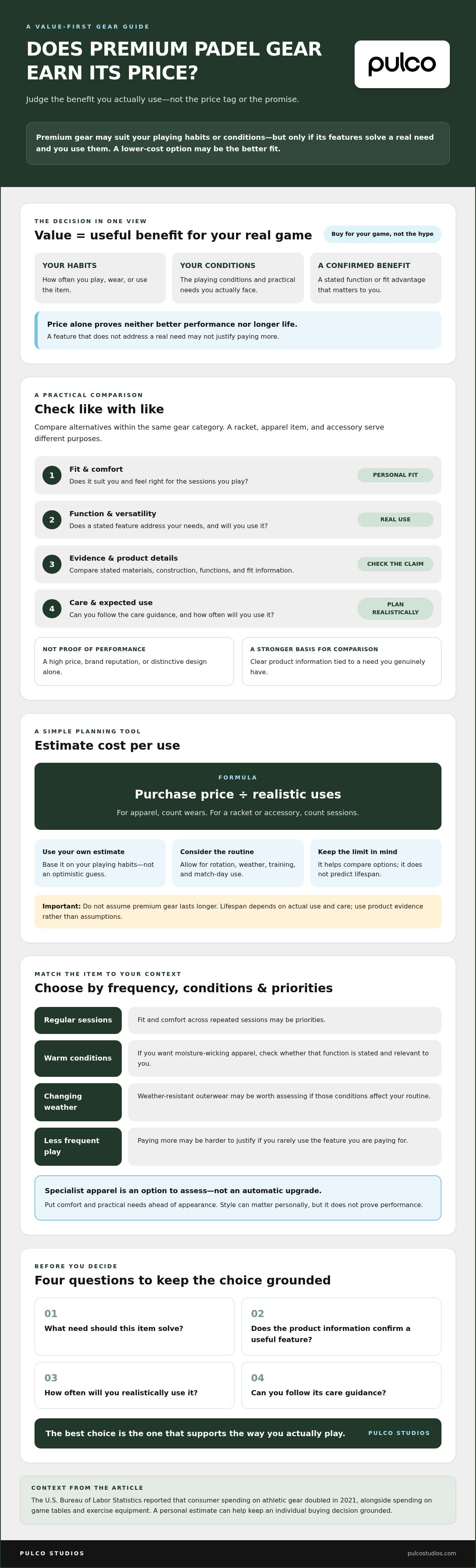
Premium gear earns its place when it delivers benefits you notice and use. That could mean a better fit, comfort during long sessions, a function suited to your playing conditions, or a design you genuinely value. The key is relevance. A feature that doesn’t solve a real need is just another line on a product page.
Price alone proves neither better performance nor longer life. Compare product information and consider how you play, how often you’ll use the item, and how you’ll care for it. A premium racket, apparel upgrade, and playing accessory serve different purposes, so assess each against alternatives in its own category. Don’t use a clothing feature to justify a racket purchase, or treat court infrastructure as personal gear.
What does value mean for a padel player?
Value is the benefit you get from a product relative to the way you actually play. A player facing changing outdoor conditions may prioritize weather protection. Someone playing regularly may focus on fit and comfort across repeated sessions. Functions such as moisture-wicking or weather resistance can be checked against stated product information. Style is more personal. It can matter, but it isn’t proof of performance.
Padel’s mix of movement, court play, and tactics makes playing context central to equipment choices. For a neutral introduction to the sport’s history and format, see Padel (sport). Then ask a sharper question: does this specific feature make your sessions more comfortable, practical, or enjoyable? If not, it may not justify paying more.
Cost per use is the purchase price divided by the realistic number of times you expect to use the item. It’s a planning tool, not a promise about lifespan. Base your estimate on your playing habits and care routine rather than assuming premium gear will last longer.
Why does premium gear cost more?
Look for details you can compare: stated materials, construction, functions, fit information, and care guidance. Check whether those details differ meaningfully from a lower-cost option in the same category. Brand reputation and distinctive design may add appeal, but neither confirms a practical advantage on court. Don’t fill gaps in product information with assumptions about how an item was made or how long it will last.
That discipline makes justifying cost of expensive padel gear less about status and more about fit for purpose. If a premium feature matches your conditions and priorities, it may be worth considering. If the benefit is vague, keep comparing. Choose the gear that supports your game, not the biggest claim.
How to Calculate Whether Expensive Padel Gear Is Worth It
Use a simple sequence before you buy: identify the need, compare the function, estimate realistic use, then review care. This turns justifying cost of expensive padel gear into a practical decision, not a guess based on branding or first impressions.
- Identify the need: What problem should this item solve?
- Compare the function: Does the product information confirm a feature that addresses it?
- Estimate use: How many sessions or wears will you realistically get?
- Review care: Can you follow the care guidance as part of your routine?
Then calculate cost per use by dividing the purchase price by the realistic number of times you expect to wear or use the item. For apparel, count wears. For a racket or accessory, count sessions. Use your own expected use, not an optimistic guess. This estimate helps compare options in the same category, but it can’t predict exactly how long something will last. Lifespan depends on actual use and care, so don’t assume it without product evidence.
How often will you use the gear?
Look at a typical season, not your most ambitious week. Estimate sessions or wears, then adjust for rotation, weather, training, and match-day use. A shirt worn across regular sessions may have a different value profile from an outer layer used only in certain conditions. Less frequent play can weaken the case for paying more, especially if you rarely use the feature you’re paying for.
Spending on sports equipment is part of a wider consumer picture: the U.S. Bureau of Labor Statistics reported that consumer spending on athletic gear doubled in 2021, alongside spending on game tables and exercise equipment. A clear personal estimate helps keep your own buying decision grounded.
Which functions justify paying more?
Start with the conditions you actually face. If you often play in warm conditions and want apparel described as moisture-wicking, that stated function may be relevant. If changing weather affects your routine, weather-resistant outerwear could merit a closer look. Pulco Studios describes its Aircon playing shirts as moisture-wicking and its Coaches Rain Jacket as weather-resistant. Check current product information and consider whether those functions match your use.
A feature adds value only if it solves a real need. Compare its stated purpose, fit, and care requirements with alternatives in the same category. If you’re weighing specialist apparel against your routine, you can explore Pulco padel apparel as one option. Let your expected use make the call.
Premium and Budget Padel Gear: Compare the Benefits That Matter
A fair comparison starts with like-for-like options. Compare apparel with apparel, rackets with rackets, and accessories with accessories. A court is infrastructure, not a personal gear alternative. Compare relevant function and evidence before comparing labels.
| What to compare | Questions to ask about either option |
|---|---|
| Function | What does the product explicitly do, and does that function address your need? |
| Fit | Is fit information available, and will the item feel suitable for your movement and session? |
| Care | Are care instructions clear and manageable for your routine? |
| Versatility | Will you use it across different sessions or conditions, or only in a narrow situation? |
| Evidence | Are claims supported by product details, or are you inferring benefits from branding or appearance? |
| Expected use | How often will you realistically wear or use it? |
What should you compare besides the price?
Read product descriptions for stated functions, fit details, and care guidance. Then check whether the design suits your climate and session type. For example, Pulco Studios describes its Aircon playing shirts as moisture-wicking and its Coaches Rain Jacket as weather-resistant. Those functions may matter in particular conditions, but only you can judge whether they suit your routine. Verify current product information before deciding.
Separate confirmed details from assumptions. A premium look doesn’t confirm performance, and a simpler design doesn’t prove a product is less capable. The U.S. Bureau of Labor Statistics provides broader context on consumer spending on athletic gear, but your comparison still comes down to product evidence and personal use.
When is a premium option a poor fit?
Reconsider the upgrade if you play occasionally, expect limited use, or can’t identify a feature that matches your needs. Paying for weather resistance you rarely need, for instance, may offer little practical value. The same applies to any function that sounds impressive but won’t affect your sessions.
A lower-priced option can be the better value when its stated features, fit, and care requirements meet the same need. Don’t label budget gear inferior without like-for-like evidence. When justifying cost of expensive padel gear, the strongest case is a relevant benefit you’ll actually use, not a premium label.
Choose Padel Gear by Playing Frequency, Conditions, and Priorities
Your routine should set the standard. Start with fit, comfort, function, and care. Then consider style. An item that looks sharp but doesn’t suit your sessions may spend more time in your kit than on court. A needs-first approach makes justifying cost of expensive padel gear more grounded: buy for the situations you actually encounter.
What should occasional players prioritize?
If you play occasionally, focus on comfortable gear that covers your core needs. Ask whether you’ll use it often enough, whether it works across the sessions you do play, and whether its care requirements fit your routine. Specialist features aren’t a default requirement. If a straightforward option meets your needs, paying more may not add meaningful value.
What changes for frequent or outdoor players?
Frequent play can make fit, comfort, and care more central because the item is part of more sessions. For outdoor play, consider the weather you actually face and check whether product information clearly addresses it. Pulco Studios describes its Coaches Rain Jacket as weather-resistant outerwear. Treat that as a function to assess against your conditions, not an automatic upgrade. For more on choosing technical padel apparel, look for the technical apparel pillar and the technical padel outerwear guide.
Before buying another layer or shirt, take stock of your current kit. Identify a specific gap, such as a need for outerwear in changing weather or a comfortable option for regular sessions. Then compare any new item with what you already own. Does it offer a distinct function? Will you use it often? Can you care for it as directed? If the answers are unclear, pause the purchase.
How can players avoid overlapping purchases?
Make a quick inventory by category. Note what each item is for, the conditions you use it in, and how often you reach for it. That makes duplicate functions easier to spot. A new piece may still be worthwhile if it fills a real gap, but a different look alone doesn’t mean you need another version. For a checklist of core kit, consult the padel clothing essentials guide.
Choose only the features that match your playing frequency and environment. To assess apparel against your routine, explore Pulco Studios’ padel apparel and review the current product descriptions.
How Pulco Studios Fits a Value-First Padel Gear Decision
A specialist label isn’t an automatic upgrade. Apply the same test you would to any gear: does the stated function meet a need you actually have, and will you use it often enough to matter? Pulco Studios focuses on technical padel apparel, so its clothing is relevant to assess when choosing what to wear for your playing routine. The best fit depends on your conditions and priorities, not the label alone.
Which confirmed Pulco offerings might suit your needs?
If you’re looking for a playing shirt with a stated moisture-wicking function, assess Pulco’s Aircon playing shirts against your comfort needs and typical sessions. For outdoor play where weather protection matters, the Coaches Rain Jacket is described as weather-resistant. Neither function is essential for every player. Consider how often you face those conditions and whether the current product details address your needs.
The CIMORO x PULCO - Padel Pack is a collaborative offering. Review its current listing to understand what’s included before deciding whether it suits you. Don’t assume the contents or value from the word “pack” alone. Other apparel offerings include the Racket Man Long Sleeve Cotton Hoodie Tee and Black Vent Gilet. Check their current descriptions rather than inferring features from their names.
What should you check before choosing?
Before purchasing, review current product details, sizing information, care instructions, and availability. Then measure the item against your actual playing frequency and priorities. A moisture-wicking shirt may be worth considering if that function addresses your comfort needs. Weather-resistant outerwear makes sense only if it matches the conditions you encounter. If the useful feature is unclear, pause and compare.
For a closer look at the Aircon playing shirt, consult the Aircon Playing Shirt guide if available, then compare its details with your existing kit. Since no guide URL is provided here, use the brand’s site navigation to locate it rather than relying on an unverified link. Consider how often you’ll wear the item, how you’ll care for it, and whether it fills a genuine gap.
That’s the practical standard for justifying cost of expensive padel gear: specific benefits, clear product information, and a realistic match with your routine. Explore Pulco’s technical apparel with those criteria in mind, and choose only what earns a place in your game.
Make Your Next Gear Choice Count
Premium gear earns its place through relevant use, not reputation alone. Compare products within the same category, check clearly stated functions, and estimate how often you’ll realistically use each item. Fit, comfort, care, and playing conditions matter more than a premium label. That’s the practical foundation for justifying cost of expensive padel gear.
For apparel, Pulco Studios specializes in technical clothing for padel players. Its Aircon playing shirts are described as moisture-wicking, while the Coaches Rain Jacket is described as weather-resistant. Check current product details and consider whether those functions suit your routine before choosing.
Explore Pulco Studios’ technical padel apparel and assess each option against your needs. Choose gear that works for you, and let every purchase earn its place in your kit.
Frequently Asked Questions
Is expensive padel gear worth it for beginners?
Not necessarily. Beginners can start with gear that fits comfortably and meets their immediate needs, then consider upgrades as their playing habits and preferences become clearer. A premium feature is useful only if it addresses a real need, such as comfort during regular sessions or clothing suited to particular conditions. Compare products within the same category, and don’t assume a higher price guarantees better performance or fit.
How do you calculate the cost per use of padel gear?
Divide the purchase price by the realistic number of times you expect to use or wear the item. For a playing shirt, estimate wears. For a racket, estimate sessions. Base the estimate on your typical routine, including rotation and weather, rather than assuming you’ll use the item every time. Cost per use is a comparison tool, not a prediction of lifespan or proof that one option performs better.
Can budget padel clothing perform as well as premium gear?
It can meet your needs just as well if its fit, stated function, and care requirements suit your sessions. Compare product details rather than relying on price or branding as a shortcut for quality. Check whether a clothing option clearly states a function you want and whether its fit works for you. Without like-for-like evidence, it isn’t fair to label lower-priced apparel inferior.
What should I compare when buying expensive padel gear?
Compare options within the same category, then review function, fit, care instructions, versatility, evidence for product claims, and how often you expect to use the item. Ask whether a feature solves a specific need in your playing routine. For clothing, consider your climate and session type. For other gear, assess the relevant product information. This makes justifying cost of expensive padel gear a needs-led decision, not a bet on the label.
Does premium padel clothing last longer?
Not automatically. A premium price alone doesn’t establish how long clothing will last. Look for clear product information and care instructions, and consider how often you’ll wear the item and how you’ll maintain it. Unless a brand provides reliable evidence about durability, treat lifespan as uncertain. Compare options using confirmed details and expected use, not assumptions about price, appearance, or brand reputation.
How much should I spend on padel gear?
Set a spending limit that works for your budget, then prioritize items that address your most important needs. Consider how often you play, the conditions you encounter, and whether a product offers a clearly stated function you’ll use. There’s no single spend that suits every player. A lower-cost option may be the better choice if it fits well and covers your requirements.
What padel gear is worth upgrading first?
Start with the item that addresses a specific problem in your current setup, such as discomfort, poor fit, or clothing that doesn’t suit your usual conditions. Check whether the issue is due to the item itself and whether a replacement offers a relevant, clearly stated function. Upgrade one category at a time, and compare alternatives before buying. Don’t replace gear just because a newer or more expensive option exists.
