


A fabric label alone won’t tell you whether an outfit will feel comfortable on court. Padel clothing for sensitive skin needs to work as a whole: the fabric against your body, seams that move with you, moisture, and fit all shape how a garment feels through quick rallies and changes of direction.
If sweat, heat, rubbing, or a close fit tends to leave your skin uncomfortable, it makes sense to pay attention to those details. There’s no single fabric or “skin-safe” claim that guarantees comfort for everyone. Instead, compare practical features and notice what works for you.
This guide explains how fabric feel, seam placement, moisture management, and fit can affect comfort without sacrificing movement or court performance. You’ll also get a practical checklist for weighing those features. Pulco Studios’s moisture-wicking Aircon playing shirts are one option to compare if moisture management matters to you. The Racket Man Long Sleeve Cotton Hoodie Tee offers a different style of apparel. Assess each garment by its intended use, feel, and fit.
Key Takeaways
- Choose padel clothing for sensitive skin by weighing fabric feel, seams, fit, moisture, and care details together.
- Prioritise the garment features that match your own comfort triggers rather than assuming one fabric works for everyone.
- Use a simple buying checklist: identify what tends to bother your skin, inspect garment details, assess fit, then test your movement.
- Read the care instructions before washing or wearing a new garment, and notice how it feels during play.
- Compare Pulco’s moisture-wicking Aircon playing shirts and cotton long-sleeve hoodie tee according to your personal comfort and performance priorities.
Padel Clothing for Sensitive Skin: Why Comfort Takes More Than a Soft Fabric
A shirt can feel soft in the changing room and still distract you halfway through a match. Padel involves quick reaches, torso twists, lunges, and sudden changes of direction. Those movements can shift fabric across your skin or pull a seam against it. Warmth and sweat may make details that seemed minor before play more noticeable.
Here, “sensitive-skin clothing” means choosing apparel with your own comfort and known triggers in mind. It isn’t a diagnosis, and a fabric label can’t predict exactly how your skin will respond. The overview of sensitive skin describes it as a dermatological concern. Clothing comfort, however, is personal and can vary with the wearer and conditions on court.
What can make padel clothing feel irritating?
Repeated movement creates friction where fabric rubs, bunches, or shifts. A damp garment may cling, feel heavier, or become less comfortable against your skin as play continues. Before a match, check likely contact points: labels at the neck, seams under the arms or along the sides, waistbands, and areas that feel tight when you reach or bend. A small pressure point can become hard to ignore when it is rubbed again and again.
Comfort is personal, not a universal fabric label
Two players can wear the same garment and have different experiences. One may prefer a smooth, close-fitting shirt; another may find the same fit restrictive or irritating. Fabric composition tells you what a garment is made from, but not exactly how its surface, seams, or cut will feel during play. Use the label as one source of information, then consider how the whole garment moves with you.
No single fabric guarantees comfort for every wearer. Cotton and technical fabrics can feel and perform differently, but neither category is automatically right for every player with sensitive skin. A moisture-wicking description speaks to moisture management, not a promise that the garment will prevent rubbing or suit every skin type.
Distinguish short-lived clothing discomfort from symptoms that persist. If a garment rubs during a rally, note where it happens and whether a seam, damp patch, or tight area may be involved. If skin symptoms are severe, continue after you’ve changed out of the garment, or keep returning, seek medical advice rather than assuming clothing is the only cause.
- Notice the moment: Is discomfort linked to heat, sweat, or a particular movement?
- Map the contact point: Check labels, seams, waistbands, and areas where fabric gathers.
- Test the fit in motion: Reach, twist, and lunge to see whether the garment pulls or rubs.
These observations give you a clearer basis for comparing padel clothing for sensitive skin. The aim isn’t to find a universal “safe” fabric. It’s to identify the combination of feel, construction, and fit that lets you move confidently on court.
How Fabric, Seams, Moisture, and Fit Affect Sensitive-Skin Comfort
Comfort isn’t decided by a fibre name alone. Composition tells you what a garment contains; surface feel describes how it feels against your hand or skin; construction covers how its pieces are joined; and fit determines how it moves with your body. When choosing padel clothing for sensitive skin, assess each as a separate clue, then consider how they work together during realistic movement.
Compare fabric feel and moisture management
Before a match, notice whether the fabric feels smooth, textured, light, substantial, clingy, or stiff to you. These are personal impressions, not guarantees. Cotton and technical fabrics can differ in feel and how they handle moisture, but neither category is universally more comfortable. Cotton may feel familiar to one player, while another may prefer a technical fabric during active play.
Moisture-wicking describes a fabric’s role in managing moisture. It doesn’t tell you exactly how a shirt will feel once you’re warm and moving, or whether your skin will find it comfortable. Pulco’s Aircon playing shirts are moisture-wicking, making them an option to compare if moisture management matters to you. Judge the fabric’s feel and fit as well as its stated function.
Check seams, labels, and fit in padel movements
Construction can shape comfort independently of composition. Look at where seams sit, whether labels touch your skin, and how cuffs, necklines, and waist areas feel. Seamless construction isn’t automatically right for everyone, and a looser cut isn’t always more comfortable. Your preference depends on where fabric moves, presses, or gathers during play.
Try movements that reflect the court: lift both arms as if reaching overhead, rotate your torso, stretch laterally, and bend into a lunge. Notice whether the garment pulls across the shoulders, rubs at the underarm, or bunches at the waist. If possible, repeat the movements in the size and layer combination you expect to wear. A shirt that feels relaxed while standing may behave differently once your arms are raised.
Specifications provide useful clues, not a forecast of your skin’s response. The same fabric blend, seam design, and fit can feel different from one wearer to another. Treat product details as a starting point, then assess the garment through touch, fit, and movement.
- Composition: Note the listed fibres, but don’t use them alone to predict comfort.
- Surface and weight: Consider whether the material’s texture or feel suits your preferences.
- Construction: Check contact points, seams, labels, and any areas that may shift.
- Movement: Test overhead and side-to-side actions for pulling, rubbing, or bunching.
Use these checks to compare Pulco padel clothing against your own priorities. The right choice balances a garment’s function with how it feels on your body, not just how it reads on a label.
Sensitive-Skin Padel Clothing Compared: Which Features Should You Prioritise?
Start with your own experience rather than a universal “best fabric” rule. The table below turns common comfort concerns into practical checks. Rank the features that matter most to you, then compare garments for court function, movement, and personal style. A feature can be useful without guaranteeing a particular skin response.
| Feature | What to compare | Prioritise it if you’ve noticed |
|---|---|---|
| Fabric feel | Composition, texture, weight, and how the material feels against your skin | Some fabrics feel uncomfortable even before you start moving |
| Construction | Seam placement, labels, cuffs, and other contact points | Rubbing or pressure tends to happen in a specific area |
| Fit | Room through the shoulders and body, and whether fabric shifts or gathers | Tightness, pulling, or bunching distracts you during play |
| Moisture function | Any stated moisture-management feature and how the garment feels during activity | Damp fabric is a recurring comfort concern |
| Care details | Washing and care instructions on the garment | You want to understand how to care for the fabric before wearing it |
Technical performance fabric versus cotton apparel
Consider intended use and feel. A performance top may offer a stated moisture-management function, while cotton apparel may appeal if you prefer its particular feel. Neither is automatically the more comfortable choice for sensitive skin. Pulco’s Aircon playing shirts are moisture-wicking; the Racket Man Long Sleeve Cotton Hoodie Tee is a distinct apparel option, rather than a match-shirt substitute. For wider context on design and court function, explore this technical padel apparel guide.
Turn your personal triggers into comparison criteria
Make a short note of what you’ve noticed, without assuming a medical cause. Is discomfort linked to a damp area, a seam, a label, or a close fit? Give the related feature more weight in your comparison. Keep the full court experience in view: a garment should feel comfortable to you while allowing the reaches and lateral movements your game demands.
- If rubbing stands out: Inspect contact points and test movement.
- If dampness stands out: Compare stated moisture functions and how each garment feels during activity.
- If tightness stands out: Assess fit through the shoulders, waist, and areas that move.
- If care matters: Read the garment’s instructions before washing or wearing it.
Rank your priorities, then use them to compare options. This gives padel clothing for sensitive skin a practical framework: comfort matters, as do confident movement and a style you want to wear.
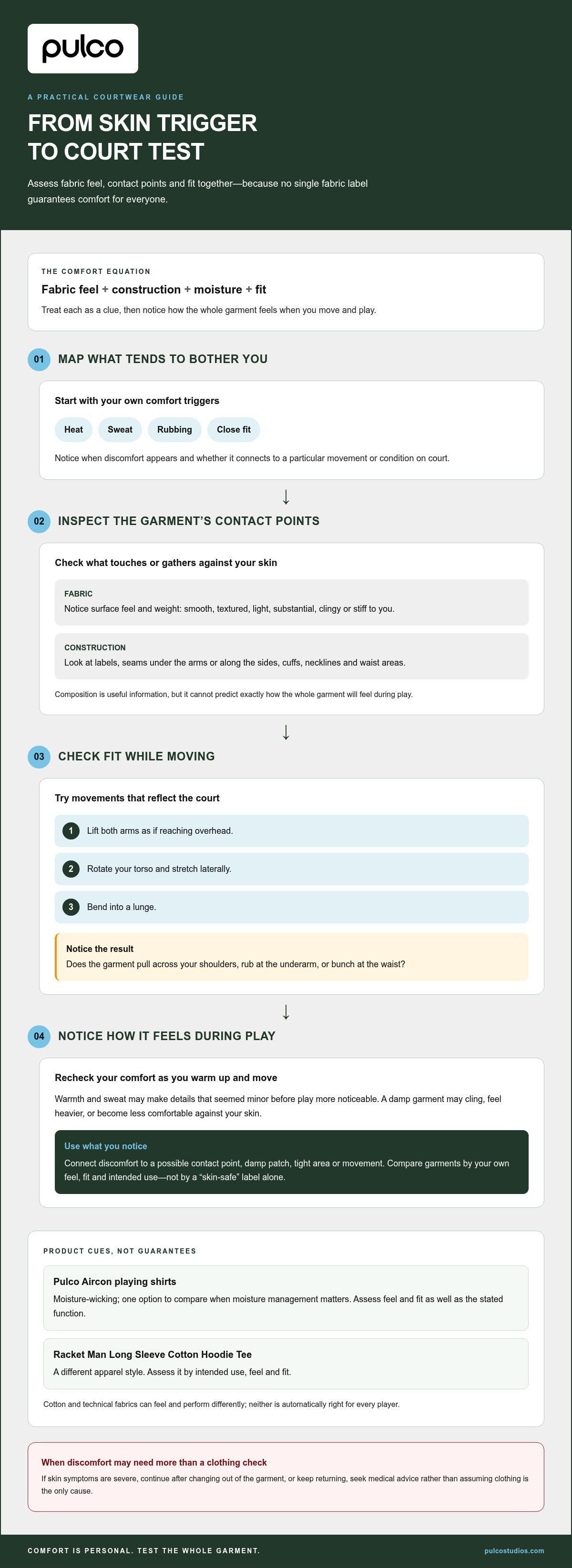
A Practical Padel Clothing Checklist for Sensitive Skin
Make the choice methodical. A quick review before buying, followed by a short wear test, can help you spot avoidable discomfort before a demanding match. Use this checklist to assess padel clothing for sensitive skin against your own experience, not a universal promise about what will feel right.
Before buying: read the garment details
Start with the product information and garment label. Note the listed composition, construction details, fit information, and care instructions. Descriptions such as “soft” or “technical” can be useful, but they don’t tell you exactly how the garment will feel against your skin. Compare those details with what you already know about your preferences. For a broader kit overview, see this guide to padel clothing essentials.
- Identify your triggers. Recall where and when discomfort has occurred. Was it linked to a seam, label, tight area, heat, or damp fabric? Treat these as observations, not a diagnosis.
- Inspect the garment. Review the listed fabric composition, seams, labels, cuffs, and other areas that may touch or press against your skin. Check the care instructions before washing or wearing it. Follow the garment’s directions rather than assuming every fabric should be treated the same way.
- Assess the fit. Check that the garment feels comfortable at rest and leaves room for the movements you need. Notice pressure at the shoulders, underarms, waist, and any area where the fabric may gather.
- Trial movement. Before relying on new clothing for a demanding match, wear it for a short, low-intensity session. Include reaches, turns, lunges, and overhead movements, then note whether anything pulls, rubs, or distracts you.
Before match day: test movement and comfort
Keep the trial low stakes. Check the garment before and during activity, including how it feels if it becomes damp. A comfortable first test is useful feedback, not a medical guarantee or proof that the same garment will always feel the same. Conditions and personal comfort can vary. If you notice a specific contact point, record it and use that observation to guide your next comparison.
Stop wearing the garment if you experience a reaction. If symptoms are persistent, severe, or unexplained, seek medical advice instead of assuming the clothing is the cause or trying to play through it. For everyday comfort checks, trust what you notice and adjust your choice accordingly.
Ready to compare apparel against your priorities? Explore Pulco’s padel clothing and assess each option by its stated features, fit, and feel.
Explore Pulco Padel Clothing Through Your Own Comfort Priorities
Pulco Studios focuses on specialist padel apparel, bringing court-specific clothing together with performance and personal style. When comparing padel clothing for sensitive skin, the useful question isn’t whether a product promises a universal answer. It’s whether its intended use, feel, and fit align with your priorities.
Compare Pulco apparel by intended use and confirmed features
If moisture management matters to you, Pulco’s Aircon playing shirts are moisture-wicking. Weigh that feature alongside how the shirt feels against your skin and moves through a rally. The Racket Man Long Sleeve Cotton Hoodie Tee is a different apparel category. Its cotton long-sleeve hoodie-tee design may suit your preferred style and feel, but assess it according to where and how you plan to wear it. A product category or fabric name alone can’t predict your individual comfort.
Choose for comfort, movement, and personal style
Before selecting a garment, bring your priorities into focus. Think about contact points that have bothered you, your preferred fabric feel, and whether moisture management matters during play. Then consider fit and movement: does the garment feel comfortable through overhead reaches and lateral steps, and does its style work for you on court? Treat each feature as one part of the decision, not a guarantee about how your skin will respond.
- Start with your own observations: Keep likely rubbing points, dampness, or restrictive areas in mind.
- Match features to intended use: Compare moisture-wicking Aircon shirts if moisture function is a priority, or consider the cotton hoodie tee as a distinct apparel option.
- Make the final call through feel and fit: Choose what supports your movement and personal style without relying on skin-safe promises.
Comfort is individual. Choose the option that fits your preferences and court needs, assessed through its features and your own experience. Explore Pulco Studios padel apparel and compare the garments against your priorities.
Make Your Next Courtwear Choice With Confidence
Turn your comfort observations into a personal reference for future kit choices. Note which details felt good, what became distracting, and how the garment moved once you were playing. That record can help you compare new options with more confidence, without relying on a universal fabric rule or a skin-safe promise.
If moisture management is a priority, Pulco Studios’ moisture-wicking Aircon playing shirts are one option to assess. The Racket Man Long Sleeve Cotton Hoodie Tee offers a different apparel choice. Let your own fit, feel, and intended use guide the decision.
Choose courtwear that supports your movement and feels right for you. Explore Pulco Studios padel apparel and compare options with your padel clothing for sensitive skin priorities in mind. Take your time, trust your experience, and step onto court ready to focus on your game.
Frequently Asked Questions
What type of clothing is best for sensitive skin during padel?
Choose the garment that feels comfortable through the movements you make most, rather than relying on a “sensitive-skin” label. For example, if a shirt shifts across your shoulders during overhead shots, try a different cut or size and repeat the movement test. Consider what you’ll wear underneath, too, since layers add contact points. The best padel clothing for sensitive skin is a personal fit-and-feel choice, not a guaranteed fabric category.
Can moisture-wicking padel clothing irritate sensitive skin?
Yes. Moisture-wicking describes a garment’s moisture-management function, not how every wearer’s skin will respond. A shirt may still feel uncomfortable because of its surface, seams, fit, or how it moves while damp. If you’re unsure, test it during a short, easy practice rather than making its first outing a long match. Notice whether discomfort starts before sweating or only after the fabric gets damp. That distinction can guide your next comparison.
Is cotton or synthetic fabric better for sensitive skin?
Neither is automatically better for every player. Cotton may suit someone who prefers its familiar feel, while a technical fabric may appeal to someone prioritising a stated performance function. Compare the actual garment, not just the fibre category: texture, construction, fit, and care instructions all contribute to the experience. If you already know one material feels uncomfortable in everyday clothing, treat that as a useful preference, but assess the specific sports garment on its own.
How can I tell whether a padel shirt is causing skin irritation?
Look for a consistent connection between wearing the shirt and discomfort, while remembering that timing alone can’t prove the cause. Note when symptoms appear, where they occur, and whether the same area touches a seam, label, or gathered fabric. If it feels safe to do so, stop using the shirt and see whether the problem recurs without it. Don’t deliberately rewear a garment that caused a severe reaction to test your theory.
Are seamless padel shirts better for sensitive skin?
Not necessarily. Fewer seams may remove a contact point that bothers one player, but seamless construction can’t guarantee comfort for everyone. Fit, fabric feel, and the placement of any remaining joins or edges still matter. If seams are your main concern, inspect the garment closely and move your arms and torso as you would during play. Compare how it feels against a garment with conventional seams rather than assuming the construction label settles the choice.
How should I wash padel clothing if I have sensitive skin?
Follow the garment’s care instructions before washing it, since different fabrics and constructions may have different care needs. Wash new clothing before wearing it if the label permits, and avoid adding extra treatments or changing several laundry products at once. Keeping your routine straightforward makes it easier to notice whether a garment itself seems connected to discomfort. Check the care label again if the garment’s texture or shape changes after washing.
When should I stop wearing clothing that irritates my skin?
Stop wearing it as soon as you notice a reaction, especially if discomfort is increasing during activity. Change into clothing that feels comfortable and avoid playing through severe symptoms. If the reaction persists after removing the garment, is severe, or has no clear explanation, seek medical advice. Clothing can be one possible factor, but an FAQ or product description can’t diagnose the cause of a skin problem.
