


Spring changes the conditions, not the demands of the rally. The right transitional padel gear for spring balances a secure racket hold with breathable, quick-drying layers that adapt as temperatures shift and sweat builds. Technical clothing supports comfort and movement, while grip choices help keep your racket steady in your hand.
A slipping grip or a layer that feels too warm can distract you from your game. The answer is to pair practical grip care with clothing you can adjust as conditions change, rather than dressing for just one moment of the match. This guide covers managing sweat and racket feel, choosing shirts and lightweight outerwear, and building a padel outfit around your playing habits, with practical advice for court and beyond.
Key Takeaways
- Choose layers around the conditions you’ll face, so you can stay comfortable as spring weather shifts.
- Look for breathable, flexible outerwear that supports movement without feeling bulky on court.
- Match shirts and other playing clothes to your comfort needs and the temperature, with sweat management in mind.
- Adjust your clothing choices for indoor or outdoor play, where airflow and exposure to the weather can differ.
3. What temperatures and weather conditions should spring padel gear handle?
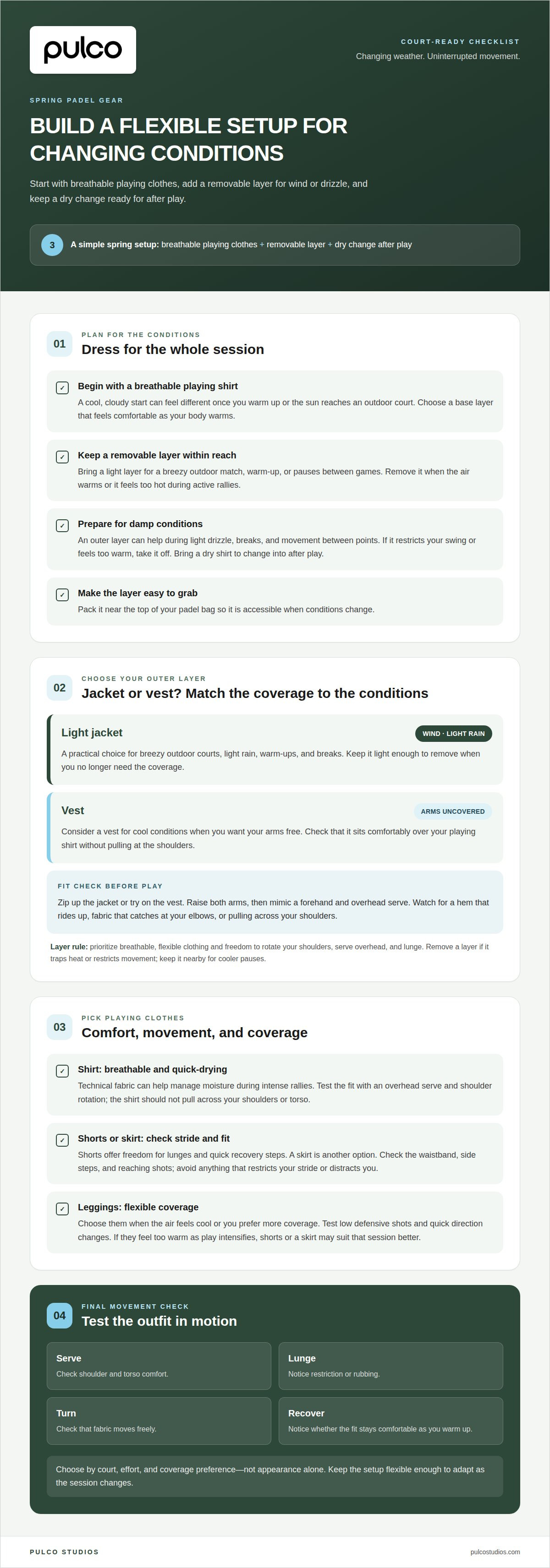
Transitional padel gear for spring should handle changing conditions across a session, not just one temperature. A cool, cloudy start can feel different once you warm up or the sun reaches an outdoor court. Choose layers you can adjust between warm-up and rallies: a breathable playing shirt as your base, with a removable outer layer for wind or drizzle.
Think about conditions, not a fixed temperature cutoff. For a breezy outdoor match, keep a light layer handy before play and between games. Remove it when the air warms rather than staying bundled through active rallies. On a cloudy day, this approach helps you adapt without changing your whole outfit. Pack the layer near the top of your padel bag so it is easy to reach.
Sweat matters as much as the weather. During intense rallies, a quick-drying technical shirt can help manage moisture as your body warms. Choose breathable clothing that allows you to serve, lunge, and change direction freely. A flexible fit can reduce restriction and rubbing when you reach across the court or rotate through a shot.
Rain calls for a different choice from warmth alone. If light drizzle starts, an outer layer can help you stay comfortable during breaks and while moving between points. Take it off if it restricts your swing or feels too warm during active play. In damp conditions, bring a dry shirt to change into after the session instead of staying in sweat-soaked clothing.
Build a simple spring setup around the forecast and court exposure: breathable playing clothes, a removable layer, and a dry change for after play. Technical clothing helps you stay comfortable as your body warms and conditions shift. The best transitional padel gear for spring gives you options without unnecessary bulk, taking you from a cool warm-up to a brighter, more demanding rally.
4. What are the best lightweight, breathable padel jackets and vests for spring?
The best spring layer moves with your game rather than restricting it. Look for breathable, flexible clothing that allows full shoulder rotation, overhead serves, and quick lunges. A jacket should be light enough to remove between rallies; a vest leaves your arms uncovered. Prioritize fit and freedom of movement over extra bulk.
Choose a layer to suit the expected conditions. A jacket works well for breezy outdoor courts or light rain, especially during warm-ups and breaks. A vest can suit cool conditions when you want your arms free. Either garment should sit comfortably over your playing shirt without pulling across your shoulders when you reach for a high ball.
Check practical details before play. Zip up the jacket, raise both arms, and mimic a forehand and overhead serve. If the hem rides up or the fabric catches at your elbows, it may distract you during points. Test a vest with the same movements. A close but comfortable fit helps keep the layer in place without feeling restrictive.
Breathability matters once rallies intensify. A layer that traps heat can feel uncomfortable as your effort rises, so remove it when you no longer need its coverage. Keep it nearby for cooler pauses. For damp spring conditions, a rain jacket is a useful category to consider; the Coaches Rain Jacket is one option in the lineup.
Choose according to your needs. If wind or drizzle is your main concern, start with a jacket. If you want more freedom for your arms, try a vest. Judge the fit through padel movements, not just while standing still. Either layer can pair with breathable playing clothes for a flexible setup during warm-ups, changing weather, and active court time.
3. Which padel shirts, shorts, skirts, and leggings work best for changing spring temperatures?
Choose playing clothes that handle movement and changes in pace. Lightweight, quick-drying technical clothing suits intense training and long matches. A shirt and shorts can feel comfortable as you warm up, while a skirt or leggings offer alternatives for different coverage preferences. Prioritize breathable, flexible garments that let you move freely across the court.
For shirts, look for a cut that stays comfortable through overhead serves and shoulder rotation. A breathable technical shirt can help manage comfort as your body warms during play. If a cool start gives way to an active match, lightweight fabric can feel less cumbersome than a heavy top. Test the fit with a serving motion: the fabric should not pull across your shoulders or torso.
Shorts suit players who want freedom of movement for lunges and quick recovery steps. Choose a comfortable waistband that stays in place as you bend and turn. A skirt offers another option for the same movements, so check how it feels during side steps and reaching shots. Whichever you choose, avoid a fit that restricts your stride or distracts you during a rally.
Leggings offer more coverage when the air feels cool or you prefer a close fit. Look for flexible fabric that moves with you during low defensive shots and quick changes of direction. Breathability still matters as the intensity rises. If leggings feel too warm once the match gets going, shorts or a skirt may suit that session better.
Use a movement test to decide: serve, lunge, turn, and recover in each garment. Notice whether the fabric restricts movement, rubs, or becomes uncomfortable as you warm up. Technical clothing can support comfort as conditions change. Choose the shirt and bottoms that suit your court, effort, and coverage preferences rather than relying on appearance alone.
4. How do spring padel gear recommendations differ for indoor and outdoor courts
Start with the court environment. An outdoor court exposes you to sun, wind, and possible drizzle, while indoor conditions depend on the venue’s temperature and airflow. Choose your base layers for where you are playing, then add or remove a light layer before play. A jacket that suits an exposed court may feel unnecessary indoors.
For outdoor sessions, pack a removable layer for cool starts or pauses between games. Wear it during breaks if the wind picks up, then remove it if it restricts your movement. On a dry, mild day, a breathable playing shirt may be enough once your rallies get more intense. Bring a dry change if rain or sweat leaves your shirt damp.
For indoor play, check the court’s airflow and temperature before adding coverage. Start in breathable technical clothing, then add a layer only if the venue feels cool during warm-up. Remove it if the court feels warm once rallies begin. This way, you are responding to the actual indoor conditions rather than the outdoor forecast.
Grip and footwear matter in either setting. Sweat can affect your racket hold indoors or outdoors, so keep your grip comfortable and dry. Padel shoes should have soles suited to artificial grass and padel surfaces to support grip and stability during quick changes of direction. Choose footwear for the playing surface, not simply for whether the court is covered.
Use a simple venue-based routine: check the forecast for outdoor play, assess indoor airflow on arrival, and choose layers you can adjust. For both settings, breathable, elastic clothing allows movement without unnecessary bulk. If you want to explore coordinated padel apparel for your next session, browse the padel gear selection and choose pieces that fit your court routine.
Pulco Studios: CIMORO x PULCO - Padel Pack
Pulco Studios’ CIMORO x PULCO - Padel Pack can help you organize your spring padel setup. Choose apparel for the conditions you play in and the coverage you prefer, rather than adding pieces without a clear purpose.
For playing shirts, consider the Aircon Playing Shirt - Black or the Aircon Raglan Playing Shirt Sky Blue. If your routine calls for an outer layer, the Coaches Rain Jacket is another option. Match your choice to your court habits, fit preferences, and the layers you already use.
Explore the pack when you want to shape a coordinated padel setup, or consider individual apparel when you’re filling a specific gap. For help choosing equipment and clothing that suits your playing routine, contact Pulco Studios.
Make Your Next Session More Intentional
Your next match is a chance to notice what truly supports your game. Pay attention to the moments when changing conditions affect your focus, comfort, or confidence. Use those observations to refine your personal setup over time. The best transitional padel gear for spring isn’t simply a collection of seasonal pieces; it’s equipment chosen around how you play and what helps you feel ready on court.
That process can be personal. Your pace, preferred fit, and typical court routine all shape which choices make sense. If you want guidance turning those preferences into a considered kit, contact Pulco Studios for advice. Take your next step with clarity, and bring a sharper sense of purpose to every spring session.
Frequently Asked Questions
How does technical clothing affect sports transition?
Technical clothing can make a new sport easier to approach by reducing distractions during movement. If you are adapting from tennis or squash, comfortable clothing lets you focus on padel footwork, positioning, and shot selection. Choose garments that feel good through repeated reaching and turning, then use practice sessions to find fits that support your natural movement.
Where to find the best equipment for a successful transition?
Start with padel-focused apparel, then choose pieces for your routine rather than buying a complete kit by default. Pulco Studios offers clothing designed for padel, so you can select what fills a real gap in your setup. Consider where you play, what you already own, and whether you need a base layer or adaptable outerwear.
Which accessories make adapting to padel easier?
Useful accessories include overgrips for a more secure racket hold, as well as wristbands or joint protectors if they suit your comfort needs. A padel backpack or racket bag can keep equipment organized between home, court, and changing room. Start with the item that addresses your biggest practical frustration, such as a slippery-feeling grip or misplaced gear.
What clothing layers are best for playing padel in spring weather?
Use a comfortable playing shirt as your base, then add a removable layer if the court feels cool before play. Choose shorts, a skirt, or leggings according to your preferred coverage and freedom of movement. Before the match, test an overhead reach and a lunge. Adjust anything that bunches, pulls, or distracts you.
What spring padel accessories help with wind, rain, and sun?
For wind or light rain, keep a removable jacket close for warm-ups or breaks. A cap or visor and sunglasses can help with bright outdoor conditions, while a small towel is useful when you sweat. Pack according to the forecast and court exposure, keeping essentials accessible rather than buried beneath your racket.
How should I layer padel clothing for cold mornings and warmer afternoons?
Start with a breathable playing shirt and carry one outer layer you can remove as the day warms. Wear it before play or during pauses, then put it away when active rallies make it unnecessary. If you commute in cooler clothes, change into your playing base layer before warming up so your movement feels unrestricted.
