


The garment’s care label gets the final say, not a one-size-fits-all laundry rule. If unclear symbols and conflicting advice have you second-guessing every wash, you’re not alone. The right washing instructions for performance fabrics depend on the garment. Heat, detergent, and fabric softener can affect how it feels and functions, so check what the maker recommends before choosing a wash method.
Start with the label, then build a repeatable routine around it. This guide covers how to wash, dry, and store technical sportswear while taking care of its fit and condition. You’ll learn how to choose a cycle, why fabric softener should not be your default, and what to review when sweat or odours linger.
Different garments can have different needs. Padel apparel, outerwear, and a cotton hoodie tee are good reminders to check each item’s instructions rather than assume one method suits all. Use the steps below to make care practical: read the label, prepare the garment, wash and dry as directed, and store it according to its needs.
Key Takeaways
- Technical sportswear isn’t all made or cared for the same way. Let each garment’s instructions guide your laundry choices.
- Use the washing instructions for performance fabrics on the care label to choose the right wash, drying, and ironing methods.
- After heavy use, prepare garments for washing when practical instead of leaving them damp and bundled.
- When sweat odours or stains linger, choose a treatment with the garment’s care instructions in mind.
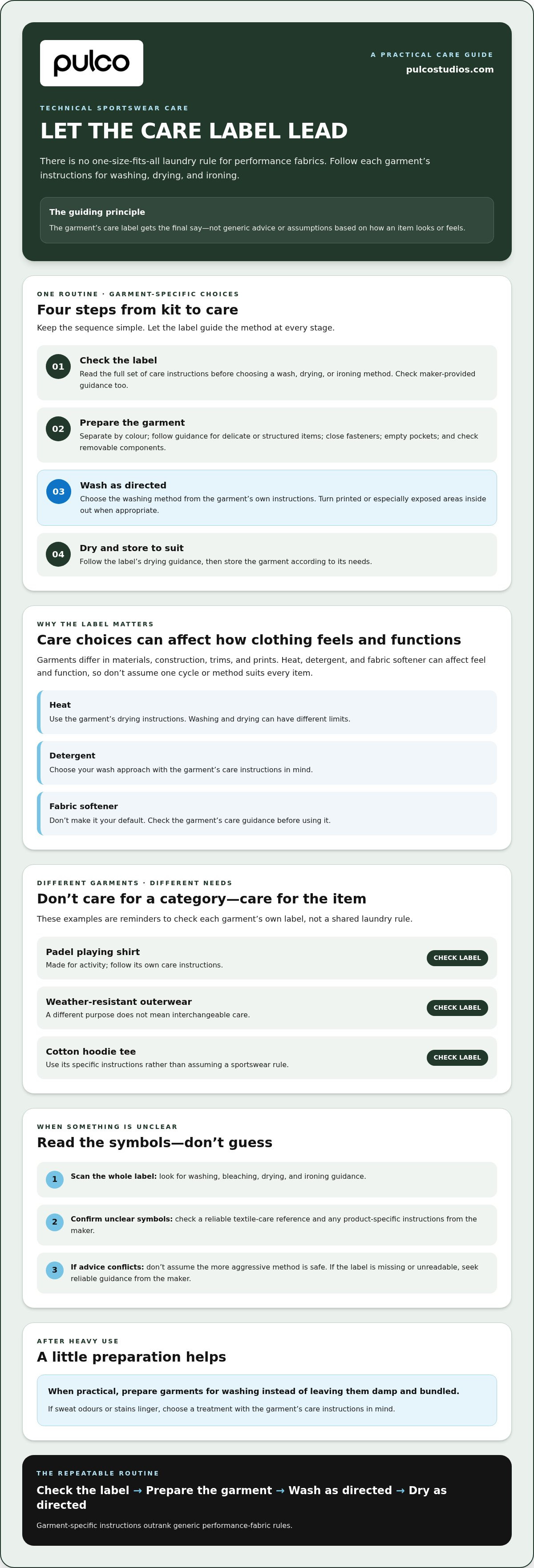
- Build a simple routine: check the label, prepare the garment, wash as directed, and dry as directed.
Why Washing Instructions for Performance Fabrics Matter
After a match, should you wash technical sportswear like everyday clothing? The answer starts with the garment, not a universal laundry rule. Sweat and soil can build up during play, while repeated friction and unsuitable care may affect comfort or garment condition. That’s why washing instructions for performance fabrics should be read in context, not replaced by generic advice.
Performance fabric describes clothing materials and constructions intended for activity. It doesn’t mean every garment uses the same fibres, structure, or care method. The broader field of technical textiles is designed around function. In sportswear, that function may relate to comfort during movement, weather protection, or coverage before and after play.
What counts as performance fabric?
Think about a garment’s use, but don’t guess its care needs from its category. A padel playing shirt is made for activity, while dedicated athletic pieces from Ocean Motion Wear or weather-resistant outerwear serve entirely different purposes. Both fit within the wider technical-apparel conversation, but that doesn’t make their materials or care needs interchangeable. Check the individual garment rather than judging by how it looks or feels.
Why one washing rule cannot cover every garment
A playing shirt, a weather-resistant jacket, and a cotton hoodie are distinct garment categories. Whether you are maintaining court kit or training pieces from Roky's Fitness & More, their construction, trims, prints, and stated care instructions can influence which washing choices are suitable. Even two items designed for sport may need different handling. Assuming every performance-led garment can take the same cycle, temperature, or drying method can mean overlooking details specific to its construction.
Garment-specific care instructions outrank generic performance-fabric rules. Use them as your starting point before sorting laundry or choosing a wash method. Pulco Studios’ range includes Aircon playing shirts, weather-resistant outerwear, and a long-sleeve cotton hoodie tee. These categories illustrate why one blanket rule won’t fit every piece. Follow each garment’s own label to guide its care through regular use.
Check Care Labels Before Washing Performance Sportswear
Before sorting your kit, treating a stain, or choosing a machine cycle, check the garment’s care label. This is the first step in following washing instructions for performance fabrics. General laundry advice can help, but it can’t account for the specific construction and care limits of every garment.
Follow the label’s washing, drying, and ironing instructions. Care symbols are shorthand for garment-specific guidance, not decoration. If you’re unsure what a symbol means, don’t guess or rely on a rule of thumb. Look it up in a reliable textile-care reference, and check any additional instructions supplied by the maker. For broader context on how design and function shape sportswear, explore technical padel apparel.
How to read a garment’s care instructions
Find the sewn-in label and scan for guidance on washing, bleaching, drying, and ironing. Some symbols may be familiar, while others can be easy to misread. Confirm unclear instructions using a trusted care-symbol guide before acting. If the maker has provided product-specific care information, use it alongside the label. When advice conflicts, don’t assume the more aggressive method is safe.
Read the full set of instructions before deciding what to do. A garment may have different limits for washing and drying, so don’t treat one symbol as permission for every stage. If the label is missing or unreadable, seek reliable guidance from the maker rather than applying a generic approach.
Prepare garments for the wash
After checking the care instructions, prepare each item according to its needs. A quick inspection helps reduce avoidable wear and makes the next steps more deliberate.
- Separate garments by colour, and follow any label guidance for delicate or structured items.
- Close fasteners before washing. Turn printed or especially exposed areas inside out when appropriate for the garment.
- Empty pockets and check for removable components. Handle detachable parts according to the maker’s instructions.
These checks apply across different kinds of padel apparel, from playing shirts to outerwear and cotton hoodies. Don’t assume they all share the same care requirements; confirm each item’s label before laundering it. For a closer look at the apparel itself, browse technical padel clothing, then let each garment’s care instructions guide your routine.
How to Wash Performance Fabrics: A Step-by-Step Routine
A reliable wash routine doesn’t need complicated products or guesswork. Start with the garment’s care label, then make each choice based on what it permits. These washing instructions for performance fabrics are a framework, not a replacement for garment-specific directions.
- 1. Wash soon after heavy use when practical. Don’t leave damp sportswear bundled for longer than necessary. Separate it from other laundry and check the label before treating marks or selecting a cycle.
- 2. Prepare the load. Wash similar colours together and avoid overcrowding the machine. Give garments room to move, and follow label guidance for delicate or structured pieces.
- 3. Choose the permitted cycle and temperature. Use only settings allowed by the garment’s instructions. If the label specifies a cycle or water temperature, follow it rather than applying a general rule for sportswear.
- 4. Add detergent as directed. Follow the detergent’s directions and any garment-specific guidance. A specialist detergent isn’t automatically required. Avoid fabric softener by default, and use it only if the garment instructions allow it.
- 5. Treat marks carefully. Check the label before applying a stain treatment. If it permits one, test it discreetly first and follow its directions. Use bleach only when the garment-care instructions explicitly allow it.
Choose the wash cycle and detergent
Cycle and temperature are garment-specific decisions. A playing shirt and a jacket may have different care requirements, so don’t assume the same machine setting suits both. Use the label to determine acceptable wash conditions for each item. Follow detergent directions, and skip extra products unless both the garment guidance and product instructions support their use.
Wash sweaty garments without rough treatment
Keep the routine simple: wash similar colours together, don’t pack the machine tight, and wash garments after heavy use when practical. These steps help avoid leaving damp kit bundled. For visible marks, resist scrubbing aggressively or reaching for bleach without checking first. Follow the label and any treatment instructions, then dry the garment according to its care guidance.
Drying, Odours, and Stains: Keep Technical Clothing in Good Condition
Washing is only part of garment care. Drying conditions can affect how an item keeps its shape and condition, so check its label before choosing a method. Don’t assume a playing shirt, cotton hoodie, and weather-resistant jacket can all be treated alike. Follow the drying method and temperature stated for each garment.
How to dry performance fabrics safely
If the label permits line drying, hang the garment in a way that supports its shape. Smooth it gently, fasten closures as directed, and avoid pulling it out of form by hanging it from a narrow or stretched area. If the label recommends another method, follow that instead.
Keep tumble drying, ironing, and high heat conditional. Use them only when the garment’s care instructions allow them, and follow any stated temperature limits. If the label is unclear, check with the maker before applying heat. That pause is better than guessing about an item’s construction.
What to do when sweat odour or stains remain
A lingering smell or visible mark doesn’t mean you should immediately reach for stronger products. Review the routine first. Was the garment left damp and bundled after heavy use? Was detergent used according to its directions? Did the wash and drying methods follow the garment label? These checks can help identify where the process needs adjusting without assuming one treatment will solve every problem.
- Recheck the label. Confirm the garment’s permitted washing and drying methods before trying again.
- Review detergent use. Follow the product directions and garment guidance. Don’t add extra detergent or combine treatments without checking instructions.
- Be cautious with stain products. Avoid layering stronger chemicals or using unverified treatments. If the label or maker recommends professional advice for a persistent mark, follow that recommendation.
Use the same careful approach across padel apparel. Washing instructions for performance fabrics don’t replace drying directions, and neither should be guessed from a garment’s category alone. Check the item’s own guidance, whether it’s a shirt, outerwear, or a cotton hoodie tee.
Choose your next piece of technical padel apparel with care in mind, then use its garment label to guide every wash and dry.
Build a Care Routine for Padel Performance Apparel
A consistent routine makes garment care easier to repeat after every match. Check the label before the first wash, prepare the item, wash it as directed, and follow its drying instructions. Washing instructions for performance fabrics are useful when you apply them to the specific garment in front of you.
Adapt the routine to the garment
Different apparel categories call for individual attention, not assumed settings. Aircon playing shirts are designed for sport, but their care instructions still come from their own labels. For more product context, read the Aircon Playing Shirt - Black guide.
Weather-resistant outerwear has a different purpose from a playing shirt. Don’t transfer shirt-care assumptions to a jacket; follow that item’s instructions for washing and drying. The padel outerwear guidance offers broader garment context, while the label remains your source for specific care requirements.
The Racket Man Long Sleeve Cotton Hoodie Tee is a cotton garment, but that alone doesn’t determine its wash settings. Check its care label just as you would for technical shirts or outerwear. Fabric category can help you recognize that garments differ; it isn’t a substitute for product-specific instructions.
Make garment care part of match-day preparation
Read the label before the first wash, not after a care problem appears. After play, prepare the garment for washing when practical rather than leaving it damp and bundled. Once it’s clean, follow the stated drying method and store it according to its care needs. Make the sequence automatic:
- Check the care label before washing.
- Prepare the garment as directed, including checking closures and pockets.
- Wash using the cycle, temperature, and products permitted by its instructions.
- Dry as directed, then store the garment in line with its care needs.
Repeatable care helps keep your kit ready for the next session without relying on guesswork. Explore Pulco Studios technical padel apparel and use each garment’s care label to guide its routine.
Make Better Care Part of Your Match Routine
Good sportswear care starts with one habit: let each garment’s label guide your choices. Washing instructions for performance fabrics aren’t one-size-fits-all, so check washing, drying, and ironing guidance before you begin. Then prepare the garment, wash as directed, and review your routine if odours or marks remain. Consistent, garment-specific care is more useful than guesswork.
That approach matters across different apparel. Pulco Studios creates technical clothing for padel players, including playing shirts, outerwear, and a cotton hoodie tee. Each category has its own purpose, so check its care label rather than assuming the same method suits every piece. A few deliberate steps after training can help you care for your kit through regular use.
Ready to bring considered design into your padel wardrobe? Explore Pulco Studios technical padel apparel. Build your routine, trust the label, and get set for the next match with confidence.
Frequently Asked Questions
Can you wash performance fabrics in a washing machine?
Often, yes, if the garment’s care label allows machine washing. Follow its instructions for cycle, temperature, and any restrictions. Before washing, separate colours, prepare the garment, and avoid overcrowding the machine. Use detergent as directed. Don’t assume every technical item can tolerate the same settings: a playing shirt, weather-resistant jacket, and cotton layer may each have different care requirements. Check each label before starting the wash.
Should you use fabric softener on performance clothing?
Don’t use fabric softener by default on technical sportswear. Garment construction and product formulas vary, so check the care label and any guidance from the maker before using it. If the instructions don’t clearly address softener, don’t guess. Use detergent according to its directions, and avoid adding extra treatments just because odour remains. Review how the garment was washed and dried before trying another product.
What temperature should you wash performance fabrics at?
There isn’t one temperature that suits every performance garment. Check the care label and use only a temperature it permits. Washing instructions for performance fabrics are specific to each item, and general laundry settings may not account for its prints, trims, or construction. If the label is missing or unclear, check with the product maker before choosing a hotter wash. Don’t infer a safe temperature from another garment.
Can performance fabrics go in the dryer?
Only put a garment in the dryer if its care instructions allow it. Follow any temperature guidance on the label, and don’t apply advice for one item to another in the same load. Some garments may call for a different drying method. Check the instructions before tumble drying, ironing, or using heat, especially if you’re unsure how the garment’s construction or any finish will respond.
How do you remove sweat odour from performance clothing?
Start by washing the garment according to its care label and using detergent as directed. When practical, wash sweaty clothing soon after use rather than leaving it damp and bundled. If odour remains, review the wash routine and check the maker’s guidance before trying another treatment. Avoid combining chemicals or using high heat as a shortcut. No single treatment is guaranteed to work for every garment or cause of odour.
How often should you wash performance sportswear?
Wash sportswear after use when it’s sweaty or soiled, while following the garment’s care instructions. If washing straight away isn’t practical, avoid leaving damp clothing bundled for a long period. The right routine depends on how the item was worn and what its label permits. Frequent, harsh washing isn’t a substitute for suitable detergent, cycle, and drying choices. Let the garment’s condition and care guidance shape your routine.
Is washing performance fabrics different from washing cotton clothing?
Follow each garment’s care label rather than relying on a broad fabric category. A technical playing shirt, weather-resistant jacket, and cotton hoodie can have different washing and drying instructions. Don’t assume settings for one will suit another. Check for product-specific guidance, too. This label-first approach keeps care practical without guessing about fibre blends, finishes, or construction that may not be obvious from the garment’s appearance.
