


The fix for padel clothing that doesn't smell after washing is usually a smarter wash routine, not more fragrance. Use a small amount of liquid detergent, skip fabric conditioner, and wash sweaty kit promptly. Detergents with enzymes can help break down body oils and other soils that hold onto odours.
It’s frustrating when a shirt comes out of the machine still smelling stale. Sweat and body oils can cling to technical fibres, while detergent or conditioner residue may make the problem worse. Mary Marlowe Leverette recommends turning workout clothes inside out and washing them in cold water on a gentle cycle to help protect the fibres.
This guide explains why padel clothing holds onto odours, which laundry products may help, and how to wash and dry your kit effectively. Find practical steps for routine loads and stubborn smells, plus simple habits to keep technical clothing fresher between sessions.
Key Takeaways
- Air out sweaty kit promptly instead of leaving it damp in a sports bag, where odours can build.
- Choose laundry products that target sweat and body oils, and avoid treatments that can coat technical fibres.
- Understand how synthetic and natural fabrics differ so you can make better choices for your playing kit.
- Use a care-label-led wash and drying routine to tackle stubborn smells while protecting your clothing.
1. Why does padel clothing retain bad odors after exercise?
Sweat is only part of the problem. Body oils and other soils collect inside a shirt during play and can remain if the wash doesn’t rinse them away. Synthetic fibres can hold odour-causing residues, and damp clothes left in a sports bag give smells time to linger. Researchers at Ghent University found that Micrococcus thrives more on polyester than cotton, one reason a synthetic top may smell different from a cotton one.
Fabric softener can make the issue worse. Its coating may cling to technical fibres, trap oils, and reduce the channels that move sweat away from the skin. Mary Marlowe Leverette advises against liquid fabric softener and dryer sheets for moisture-wicking workout clothes, noting they can trap odours and damage elastic. Skip conditioner, including products poured into the machine’s softener compartment. A fresh scent doesn’t remove the residue that makes clothes smell after washing.
Use detergent sparingly, too. A large dose can leave residue on synthetic fabric, especially if the machine doesn’t rinse thoroughly. Follow the care label and product directions, using a small amount of liquid detergent. Enzyme detergents can help break down body oils, proteins, and other soils into particles that rinse away more easily. If a shirt still smells, don’t automatically add another capful. Review the dose, load size, and rinse performance first.
Elastane is another reason to keep the wash gentle: high heat and harsh treatment can wear down its stretch. Turn a sweaty top inside out so detergent reaches the fabric that touched your skin, and avoid softener that may coat its fibres. Lyocell differs from polyester, but fibre choice alone doesn’t guarantee odour resistance. Sweat level, garment construction, and drying all matter. Air a Lyocell shirt promptly after play, then wash it according to its label to help prevent damp odours from lingering.
2. What specific products exist to keep padel clothing odor-free?
Odour control depends on both laundry products and fabric choice. Enzyme detergents help break down sweat-related soils, including body oils and proteins, so they rinse away more easily. Choose a detergent intended for activewear or one containing enzymes, and follow its dosing directions. Laundry sanitizer is another option for odour-prone loads. Use it as directed rather than combining several products and leaving residue behind.
Synthetic fabrics such as polyester are popular for sports because they dry quickly and move moisture away from the body. But their structure can hold onto body oils, which feed odour-causing bacteria. Researchers at Ghent University found that Micrococcus thrives more on polyester than cotton. This helps explain why synthetic workout clothes can smell again after washing, especially when soils remain trapped in the fibres.
Natural fibres, including cotton and some treated plant-based fabrics, behave differently. They can absorb more moisture and may feel damp longer during intense play. Odour-resistant treatments can help, but they don’t replace thorough washing and drying. Silver-based treatments may also lose effectiveness over repeated wash cycles. Choose a fibre to suit your session, then follow the care label to protect its finish.
In the United States, odor-resistant padel shirts and shorts don’t have a single set price. Cost depends on factors such as fabric, construction, and whether the garment has an odour-control treatment. Compare those features with your playing routine rather than assuming a treatment alone will keep clothes fresh.
For a practical product pairing, use an enzyme detergent for routine loads and reserve laundry sanitizer for persistent odour. Skip fragrance-heavy products that mask smells without removing the soils causing them. Wash each garment according to its label and let it dry completely before storing it. This routine gives both synthetic and natural-fibre kit a cleaner reset between workouts.
3. Factors that contribute to odor buildup
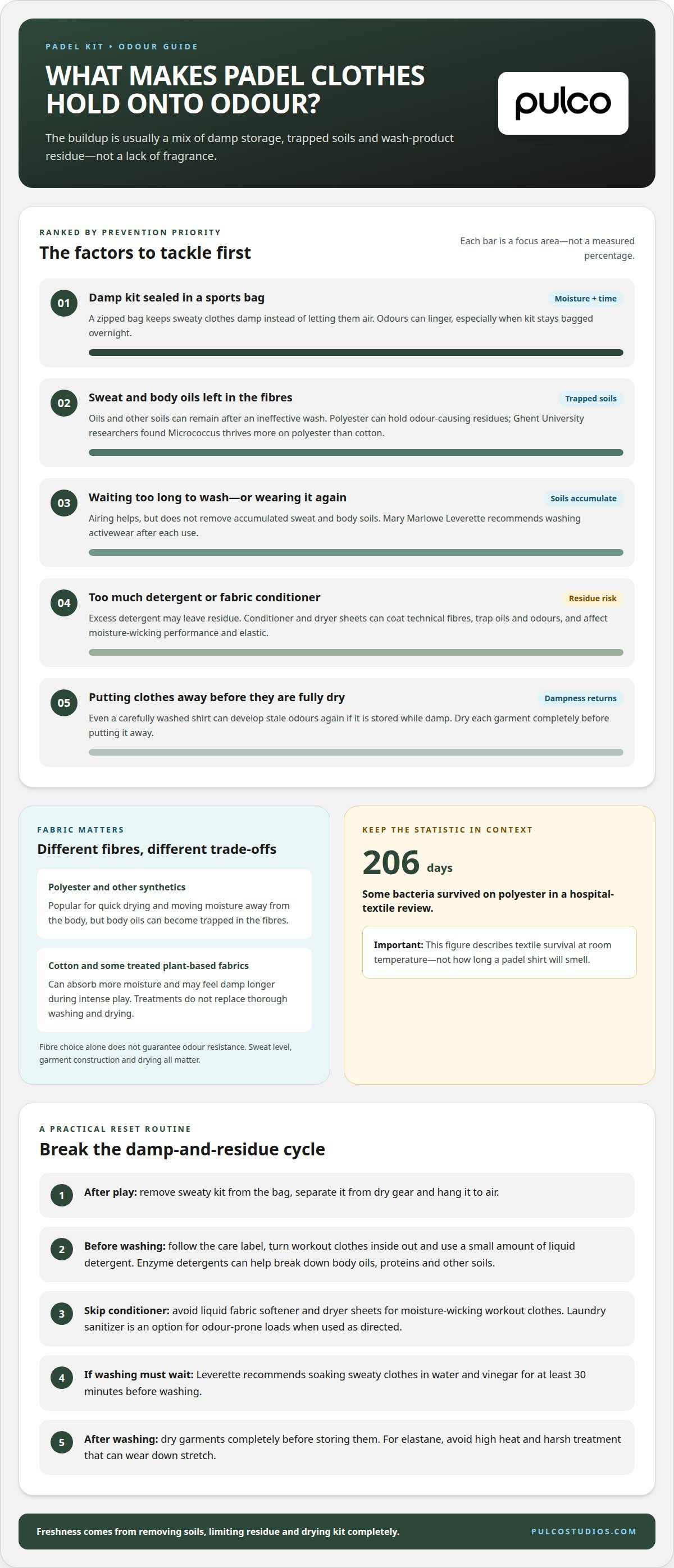
Moisture and time are a potent combination. After a hard match, a damp shirt trapped in a zipped sports bag stays wet instead of airing out, allowing odours to linger, especially if the kit stays bagged overnight. Remove clothes after play, separate them from dry gear, and hang them to air before laundry. This small post-match step helps break the damp-storage cycle.
Fabric also affects how odour develops. A review of hospital textiles reported that some bacteria survived on polyester for up to 206 days at room temperature. That figure describes textile survival, not how long a shirt will smell, but it highlights why lingering dampness and soiled fibres deserve attention. Sweat and body soils left on polyester can give odour-causing bacteria material to persist on. A shirt worn through an intense, sweaty session needs a different reset from one worn briefly.
Wash frequency matters, too. Mary Marlowe Leverette recommends washing activewear after each use to prevent sweat, body soil, and bacteria from building up. Don’t judge a shirt by its surface alone: sweat collects inside the garment, including under the arms and along the back. Airing helps between laundry steps, but it doesn’t remove accumulated soils. For example, a top worn through a long match should go into the wash rather than straight back into rotation.
If laundry has to wait, keep the damp kit out of a closed hamper. Mary Marlowe Leverette recommends soaking sweaty clothes in water and vinegar for at least 30 minutes before washing when immediate laundering isn’t possible. White vinegar is a prewash option, not a reason to leave clothes soaking indefinitely. After washing, prioritize drying: let each garment dry completely before storing it. Remember, a clean shirt put away while damp can develop stale odours again, even after a careful wash.
4. Washing padel clothing correctly
A reliable laundry routine starts before the washing machine runs. Wash sweaty kit as soon as possible, and follow each garment’s care label. For most synthetic padel clothing, a 30°C wash can tackle sweat and odour while treating fibres gently. A 40°C wash is an option only when the label allows it. To get padel clothing that doesn't smell after washing, don’t raise the temperature automatically; the fabric’s instructions come first.
Turn each garment inside out, then wash sportswear separately from cotton clothes. Mary Marlowe Leverette recommends cold water and a gentle cycle to help protect workout fibres. For a full load, she recommends approximately 2 teaspoons of detergent. The right dose depends on the load and detergent directions, but adding extra isn’t a shortcut to cleaner kit. Skip fabric softener, which can leave a coating on technical fibres.
If a shirt remains stale, try a targeted soak before another wash. For routine activewear care, Mary Marlowe Leverette recommends soaking clothes for 15–30 minutes in 1 part distilled white vinegar and 4 parts cold water. For deeply odorous clothing, she recommends 1 part vinegar and 3 parts water for at least 1 hour. Then wash as usual, following the care label. Don’t mix cleaning products in the same soak.
Drying completes the reset. Mary Marlowe Leverette recommends air-drying activewear because machine drying can set odours into fibres. Avoid radiators and other high-heat spots, which can degrade delicate fibres. Let each piece dry fully before putting it away. If padel clothing still smells after washing, review the detergent dose, rinse, and drying routine. Consistent care helps protect technical kit’s fit and feel.
Keep the routine consistent, then refresh your playing kit with the CIMORO x PULCO Padel Pack.
Pulco Studios: CIMORO x PULCO - Padel Pack
The CIMORO x PULCO - Padel Pack from Pulco Studios is a natural next step when you’re building a dedicated padel wardrobe. Better laundry habits help reduce lingering odours, while kit designed for padel completes the routine. Keep playing clothes separate from damp gear, wash them according to their care labels, and let them dry fully before packing.
To add another option to your rotation, consider the Aircon Playing Shirt - Black or Aircon Raglan Playing Shirt Sky Blue. These padel clothing options don’t replace proper washing and drying. Match your kit to your playing routine, then keep post-session care consistent.
For questions about padel apparel, contact Pulco Studios.
Build a Better Matchday Rotation
Fresh kit helps you feel ready for the next match. Build your clothing rotation around your playing schedule: keep a clean set ready, and give worn gear time to dry before it goes back in the bag. A consistent routine makes it easier to step onto court feeling composed, with performance and personal style in sync.
For a dedicated padel wardrobe, Pulco Studios offers the CIMORO x PULCO - Padel Pack, the Aircon Playing Shirt - Black, and the Aircon Raglan Playing Shirt Sky Blue. Keeping padel clothing from smelling after washing starts with good care and continues with kit suited to the rhythm of play. Choose pieces that fit your rotation and keep them ready for your next session.
Take the next step at your own pace. Contact Pulco Studios today to explore padel apparel options for your matchday routine. Keep your focus on the court, and bring a sharper standard to every session.
Frequently Asked Questions
What home tricks help eliminate bad odors from clothes?
Adding half a cup of baking soda to the wash can help neutralize odours in padel clothes. For a stale garment, try soaking it in a baking-soda mixture before washing. Keep home remedies separate from other laundry additives, and follow the garment’s care label. If the smell persists, consider whether the washing machine needs cleaning.
What is the best anti-odour technology in sportswear?
There isn’t one anti-odour technology that suits every player or fabric. Silver-based treatments are one option, but they can lose effectiveness after as few as 20 washes. Consider the garment’s care requirements and how often you’ll wash it, rather than relying on a treatment alone. Consistent laundry habits still matter for keeping sportswear fresh between sessions.
What specific products exist to keep padel clothing odor-free?
Enzyme detergents, baking soda, and laundry sanitizers are options for odour-prone sportswear. For activewear, a phenolic laundry sanitizer can be used in the final rinse instead of chlorine bleach. Mary Marlowe Leverette recommends using laundry sanitizer about once a month. Follow the product label, and don’t combine additives unless their instructions say they’re suitable together.
Why does padel clothing retain bad odors after exercise?
Odours can linger when sweat and body soils remain in a garment after a match. A shirt worn during a long, intense session needs washing, while a briefly worn, sweat-free top is a different case. One player described rewearing a shirt only after less than 3–4 hours of wear without sweating or exercising. Don’t treat that exception as a rule for match kit.
Why do synthetic padel clothes still smell after washing?
A washing machine can contribute to stale smells if moisture remains around the drum or gasket between loads. Leave a front-loading machine open to air when possible, or dry the drum and gasket after a cycle. Running an empty hot or sanitizing cycle periodically can also help clean the machine. If several garments come out musty, consider the washer as well as the clothes.
