


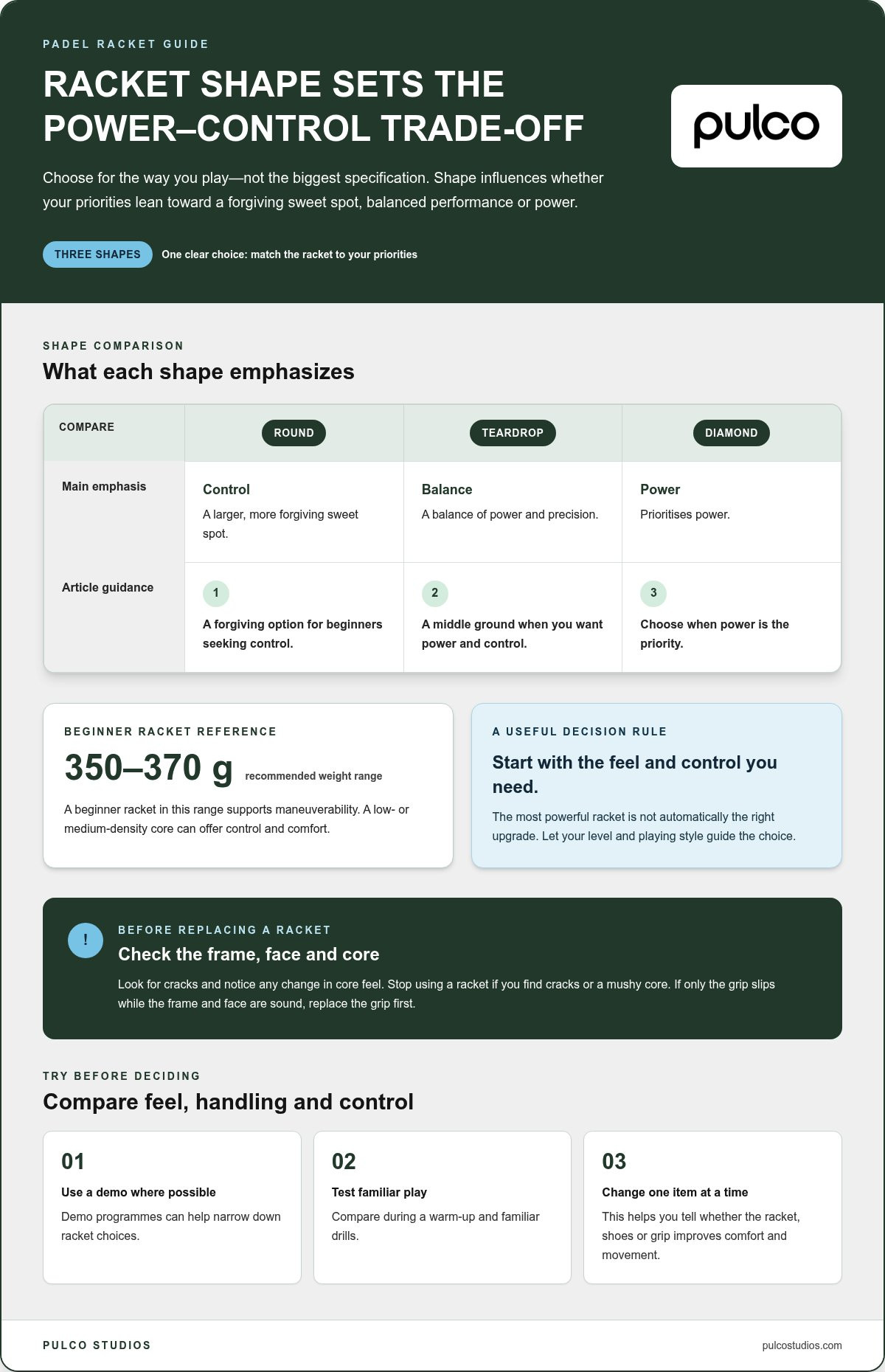
The most powerful racket isn’t automatically the right upgrade. When upgrading your padel kit, choose a round racket for a forgiving sweet spot and greater control, or a teardrop shape for a balance of power and precision. Let your level and playing style guide you, not the biggest specification.
It’s tempting to replace everything at once, but a slipping grip, worn shoes and a racket that no longer suits your game call for different fixes. A new bag won’t solve a performance problem. This guide helps you spot when gear needs replacing, choose a racket that fits your game and select a bag for what you actually carry. You’ll also find a practical way to set an upgrade budget and prioritise what matters on court. Make every piece earn its place.
Key Takeaways
- Replace an overgrip when it loses traction, and keep it clean and dry to maintain a secure hold.
- Set your upgrade budget by prioritizing worn or limiting gear first, rather than replacing every item at once.
- Choose court footwear and essentials that suit your playing conditions, then keep them ready for your next session.
- Match your bag to what you carry: a versatile backpack may be enough, while a dedicated padel bag adds racket-focused storage.
- Once your equipment is sorted, Pulco Studios’ Aircon Playing Shirt - Black offers a padel-specific apparel option for completing your kit.
Overgrips and other useful accessories
For hot weather, choose light, breathable clothing. For cold sessions, add a layer you can remove as you warm up. In winter, wipe the racket grip with a dry cloth before each session and consider a thicker, rubberised wrap for a more secure hold.
Start with the point of contact. Your hand, grip, racket frame and face work together. If the handle slips but the frame and face are sound, replace the grip first rather than buying another racket.
- Replace the overgrip every three or four sessions. A fresh wrap helps maintain a secure hold, while a worn one can move during a swing.
- Inspect the grip before play. Look for smooth patches, loosened edges or a slick feel, then change it if your hand shifts during contact.
- Keep a spare overgrip in your bag. You can replace a damaged wrap before a session instead of adjusting your hold around it.
- Dry the handle after winter play. A dry cloth removes surface moisture and helps prevent a damp grip from becoming slippery.
- Store the racket in a dry bag. Keeping it away from damp conditions can help extend its lifespan by a few weeks.
Budget overgrips can start slipping after a couple of months of regular winter play. Treat that as a cue to inspect the handle, not an automatic reason to replace the racket. If the racket feels stable and its face is intact, a fresh overgrip may restore a more controlled hold. Wrap it with even tension from the base of the handle to the top, smoothing out folds that could create pressure points.
Match accessories to the session, too. A water bottle supports your routine between games, while a small towel helps clear sweat from your hands before serving. For cold-weather play, a thicker, rubberised wrap can feel more secure than a worn, smooth grip. In warm conditions, check whether sweat makes the handle slick and replace the overgrip when it loses traction.
Choose accessories that solve a real problem, rather than simply filling space beside your racket. A tennis overgrip may fit some handles, but check that its length and feel suit your padel racket. Grip thickness affects how comfortably your fingers close around the handle, so test the finished wrap before play. Accessories won’t enlarge the racket’s sweet spot or repair a damaged surface. They’re useful when they improve comfort, handling or upkeep.
Kit-upgrade checklist and budget
Essential upgrades usually start with the racket, court shoes and padel balls. Replace the item limiting your play first. A complete setup makes sense only when several essentials are missing or worn. When upgrading your padel kit, prioritise the gear that directly affects comfort, movement or control.
Build your budget around how often you play, the condition of your current gear and the feature you need. These are UK benchmarks, not US prices.
- Inspect the racket. Check its frame, face and core for visible damage or a change in feel.
- Assess your shoes. Look at outsole wear and lateral support, especially if you play regularly.
- Check your balls. Padel balls differ from tennis balls, so buy the correct type for the sport.
- Separate needs from extras. Prioritise fit and reliable play before adding a specialist bag or accessories.
- Set a spending ceiling. Reserve the larger share for the item that affects your movement or control most.
Beginners who’ve played for under three months should focus on lessons before spending on a new racket. If your current racket still suits your control and comfort, replacing worn balls or shoes may be more practical. Upgrading your padel kit works best when each purchase answers a specific need.
Test new equipment before committing where possible. Demo programmes can help narrow down racket choices: compare feel, handling and control during a warm-up and familiar drills. Change one item at a time so you can tell whether the racket, shoes or grip improves comfort and movement. Stop using a racket if you find cracks or a mushy core.
Buy padel balls rather than tennis balls, which have different pressure and bounce characteristics. A three-ball can is enough to get started, while a 12-ball can lowers the price per ball. Keep your first upgrade focused. A coordinated look can come later, with padel-specific apparel as a separate kit choice.
Padel kit checklist
For tournament play, check the event’s equipment requirements before entering. A padel racket is solid, perforated and stringless, but the event’s rules determine which equipment is accepted.
Use this checklist to review the essentials before your next session. Fit, court surface and playing frequency all affect what belongs in your bag.
- Choose a racket that suits your level. A beginner racket weighing 350-370 g supports maneuverability, while a low- or medium-density core can offer control and comfort.
- Match the racket shape to your priorities. A round head gives beginners a larger, forgiving sweet spot; a teardrop shape balances power and control, while a diamond shape prioritises power.
- Inspect the racket before every session. Look across the frame and face for cracks, then notice any change in core feel; visible damage or a mushy core calls for attention.
- Choose padel shoes with lateral support. Padel involves side-to-side movement, so running shoes aren’t recommended; herringbone or omni tread can suit sand-filled courts.
- Keep court shoes dedicated to padel. Outdoor wear can affect the outsole, while court-suited shoes help preserve traction during lateral movement.
- Carry padel balls, not tennis balls. Padel balls have lower internal pressure and bounce, and a three-ball tube is enough to get started.
- Pack an insulated water bottle. A 750 ml-1 litre bottle gives you a practical hydration option across a padel session.
- Replace wristbands when they stop absorbing sweat. A typical replacement interval is 12-18 months, unless reduced absorbency signals an earlier need.
Before buying padel shoes, consider the court surface. Sand-filled artificial turf suits a non-marking sole with herringbone or clay-style tread. Quality tennis shoes for indoor or clay courts can also work when you’re starting out. Check that the shoe holds your foot securely during a side-step instead of choosing by appearance alone.
Inspect balls before play, too. Worn felt can affect drag and speed, while heat can damage balls in storage. Keep them away from hot storage areas and carry at least one tube per session. A pressurised storage tube can extend their playable life.
Finally, check your clothing and accessories against the session ahead. Choose breathable clothing for warm conditions and add a removable layer when it’s cold. Keep the essentials together, then replace only items that fail the checklist. This keeps your padel kit focused on fit, court movement and reliable play.
A padel racket for tournament play should be solid, perforated and stringless. Check the event’s equipment requirements, since its rules determine which rackets and other equipment are accepted.
Selecting a padel bag
Choose a bag for what you carry to a session, not its most impressive feature. A backpack-style padel bag typically holds one or two rackets, shoes, a change of kit and a water bottle. For players starting out, a versatile backpack or duffel can be more useful than a specialist racket bag. Keep the purchase practical while your routine takes shape.
Capacity is only the first consideration. A dedicated padel bag may include a padded or thermal compartment to protect a racket, which matters if you carry it alongside shoes or other equipment. Multiple racket slots and separate storage can make sense as your kit grows, especially if you bring a spare racket or a change of clothing to regular sessions.
- Count what you carry. Lay out your racket, shoes, water bottle and spare clothing before choosing a bag.
- Check racket protection. Look for a padded or thermal compartment if you want a dedicated place for the frame.
- Match storage to your routine. Choose separate compartments when you carry shoes and a change of kit together.
- Consider how you move. A backpack keeps your hands free on the walk to court, while a duffel gives quick access to packed gear.
- Leave room for your next upgrade. If you expect to carry two rackets, select capacity for both rather than forcing them into a smaller bag.
Treat these as UK market ranges, not universal prices. Choose according to how much equipment you transport and whether racket-focused protection suits your routine.
Think through a typical trip before buying. If you bring one racket, shoes and a bottle, a compact backpack may cover the essentials. If you carry a second racket, spare clothing and extra accessories, dedicated compartments can help keep everything organised. When the bag design allows, pack the racket separately from your shoes to prevent court dirt transferring to the handle or clothing.
Don’t choose a bag based on your racket shape alone. A round, teardrop or diamond racket needs a compartment that fits securely without putting pressure on its frame. Test the bag with your actual kit packed, including shoes and a bottle. That shows whether it’s comfortable to carry and easy to access. If you’re upgrading gradually, start with capacity for today’s essentials and avoid paying for storage that will stay empty.
Signs it is time to upgrade
A calendar can prompt an inspection, but your racket’s condition and your progress matter more. Most UK beginners outgrow a budget racket within six to twelve months as their footwork and swing speed develop. A budget racket’s estimated realistic lifespan in the UK’s mixed conditions is six to nine months. These are different signals: one reflects changing needs, the other expected durability.
Look for performance limits, not just visible damage. An upgrade may make sense when your racket restricts the power, precision or effects you’re trying to produce. If your technique has improved but your shots still lack the response you want, compare rackets with different shapes and balances before buying. To decide whether upgrading your padel kit is necessary, identify a specific gap in your game.
- Inspect the frame and face. Cracks or damage can affect how the racket plays, so don’t treat cosmetic wear as the only test.
- Notice changes in feel. A mushy core or reduced stability can signal that the racket no longer performs as expected.
- Track playing frequency. Several sessions each week can make a more durable, higher-quality racket worth considering.
- Review your progress after six or more months. Even without visible damage, your technique may have outgrown a beginner racket.
- Check your shoes and grip, too. Worn traction or a slipping handle can affect movement and control without requiring a racket replacement.
Beginners who’ve played for under three months should prioritise lessons before spending on a new racket. Stronger basics can clarify what you need, whether that’s easier control or more power. A teardrop shape offers developing players a balance of both. Don’t jump straight to a diamond head just because aggressive players use it.
Playing twice a week in winter can put a beginner racket under heavier use, and some players may need a replacement by Christmas. Outdoor conditions make storage habits important, too: keep a racket away from heat and store it in a dry bag. A backpack helps carry essentials, but a damaged racket still needs replacing, not better storage.
Use this decision sequence: identify the problem, check whether a grip or shoe change addresses it, then test a different racket style. If the basics remain solid and your equipment still limits power, precision or shot effects, it’s time to compare upgrade options. A considered approach to upgrading your padel kit keeps each replacement tied to a clear playing need. For a playing-kit refresh beyond equipment, explore padel-specific apparel as a separate choice.
Pulco Studios: Aircon Playing Shirt - Black
Pulco Studios’ Aircon Playing Shirt - Black is a padel-specific option for refreshing your on-court kit. Once your racket, shoes and bag suit your game, clothing is the next practical part of your setup. Choose a playing shirt that fits your routine and personal style, without treating apparel as a substitute for equipment that needs replacing.
For another look, consider the Aircon Raglan Playing Shirt Sky Blue or the CIMORO x PULCO - Padel Pack. The Coaches Rain Jacket is an outerwear option for changing conditions. Each offers a distinct way to complete your padel wardrobe while keeping the focus on the sport.
Explore the range and choose the piece that fits your playing kit. Visit Pulco Studios online to find your next padel apparel upgrade.
Make your next kit choice count
Your next step in upgrading your padel kit doesn’t have to be another equipment purchase. Choose one detail that helps you feel prepared to play, whether that means refining your routine or adding clothing that reflects your style. Keep the decision intentional. The right kit should support how you move on court and how confidently you step onto it.
For a padel-specific apparel update, Pulco Studios features the Aircon Playing Shirt - Black, Aircon Raglan Playing Shirt Sky Blue and CIMORO x PULCO - Padel Pack. Consider them alongside the equipment choices that suit your game. Performance and presence belong in the same bag.
Ready to explore the apparel options? Contact Pulco Studios to discuss your project, and take your next step toward a kit that feels like yours.
Frequently Asked Questions
What padel racket should I buy?
For a first racket, choose a round head with a forgiving sweet spot and a weight around 350-355 g. It prioritises control while you build consistent contact. If you’re developing your technique and want a mix of power and control, consider a teardrop shape instead. Try different styles through a demo programme when possible, and judge each racket by how naturally you can manoeuvre it during your usual shots.
What do you need to play padel?
You need a padel racket, court-suitable shoes and padel balls. Add comfortable sports clothing, water and a towel for a more practical session. Before leaving, pack a tube of balls and check that your shoes feel secure during side-to-side movement. If you’re borrowing equipment for your first outing, make sure the racket feels manageable in your hand and the balls are made for padel, not tennis.
What should you look for in a padel bag?
Choose a bag that fits your routine and protects what you carry. A backpack-style option can hold one or two rackets, shoes, spare clothing and a water bottle. For frequent play, look for a padded or thermal racket compartment and separate storage to keep shoes away from clean kit. Check the strap comfort with the bag packed, since weight distribution matters on the walk between transport and court.
How do I choose a padel racket based on skill level and playing style?
Start with the shots you want to control. Beginners often benefit from a round racket’s larger sweet spot, while developing players may prefer a teardrop shape for balanced power and control. An aggressive player with consistent technique can consider a diamond head for smash power. If accuracy and easy handling matter most, choose a low balance. Pick a racket that complements your movement rather than forcing you to change your swing.
How do padel racket materials, shapes, balance, and weight compare?
Fiberglass offers a flexible, forgiving face for newer players; advanced rackets may use carbon fiber for durability and power, with greater precision demands. A 3K carbon surface is one option for players seeking a blend of power, control and durability. EVA Soft is a beginner-friendly core. Round heads favour control, teardrops balance power and control, and diamonds add smash power. Low balance aids placement; high balance shifts weight toward the head.
When should I replace a padel racket, and what signs show it is worn out?
Replace a racket with cracks or a mushy core, and reassess it if your game feels limited in power, precision or shot effects. Consider an upgrade after 6+ months of play, even without visible damage, as technique and playing frequency can change what suits you. Mid-range rackets often last 12-18 months. Inspect the face and frame regularly, and compare how the racket feels during familiar shots.
