


Your first padel outfit should move as fast as you do. For what to wear playing padel, choose breathable, moisture-wicking clothes with enough stretch for quick turns and reaches, plus court shoes with grip and side support. A cap, bag, gloves, or sleeves can be useful extras, but only if they suit the conditions and won’t distract you during play.
It’s easy to focus on a shirt and shorts and overlook the details that shape comfort: footwear, layers, and what you bring courtside. You don’t need a specialist wardrobe to get started, but restrictive clothes, heavy cotton, and running shoes can make movement less comfortable.
This guide covers a practical first-game outfit, how to choose shoes, and what to avoid. You’ll also find simple advice on socks, sun protection, weather-ready layers, and useful accessories, so you can arrive prepared and keep your attention on the rally.
Key Takeaways
- Start with breathable, stretchy clothing that lets you move freely, and adjust your layers to the weather and court conditions.
- Tennis shoes with good traction and side support can work for a first game; choose court footwear with non-marking soles and grip suited to the surface.
- Skip heavy cotton, restrictive outfits, loose layers, and running shoes that can make quick lateral movement harder.
- Pack practical extras such as socks, a towel, sun protection, or a change of clothes, depending on where you’re playing.
- Keep caps, bags, gloves, and sleeves purposeful: bring only what suits the conditions and won’t distract you during play.
1. Can I use my tennis shoes on the padel court?
Yes. Tennis shoes with good traction and side support can work for your first padel sessions. Choose a pair with non-marking soles and tread suited to the court surface. Clay-court tennis shoes with a herringbone outsole can work for early sessions. Running shoes are a weaker choice because they aren’t designed for repeated side-to-side movement. The International Padel Federation doesn’t impose strict shoe requirements, but court grip and stability still matter.
In the United States, a basic padel outfit has no single standard cost. You can wear suitable athletic clothes and tennis shoes you already own, then replace only what you need. The total depends on whether you need shoes, clothing, or both, and on the materials and features you choose. A breathable shirt, flexible shorts, and court-ready shoes make a practical starting point.
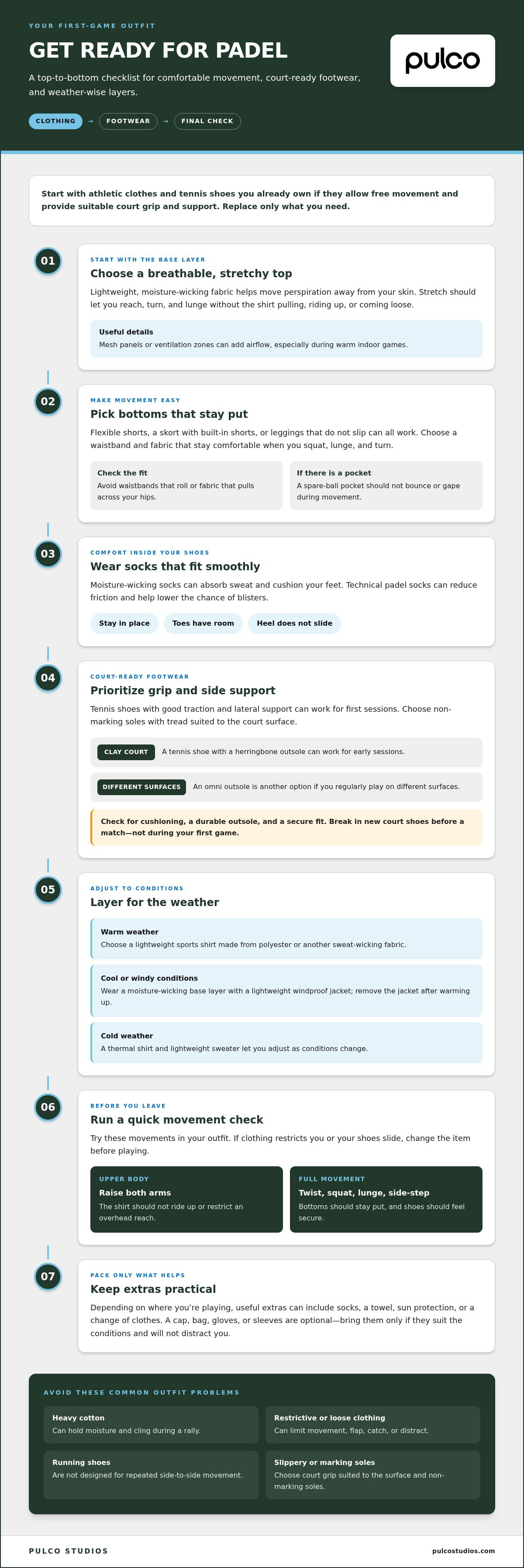
Build comfort around movement and temperature control. Lightweight, breathable fabrics allow air to circulate, while moisture-wicking fabrics move perspiration away from your skin so it can dry on the garment’s surface. This can help regulate body temperature during play. Stretch matters too: fabric should let you reach, turn, and lunge without pulling, riding up, or coming loose. Mesh panels or ventilation zones can add airflow, especially during warm indoor games.
Check shoe fit and construction before stepping onto the court. Padel shoes and breathable tennis shoes can offer support and grip; mesh panels can help keep feet cool. Look for lateral support, cushioning, and a durable outsole suited to the playing surface. An omni outsole is another option if you regularly play on different surfaces. Break in new court shoes before a match instead of testing them during your first game.
For a more comfortable fit, wear moisture-wicking socks that absorb sweat and cushion your feet. Technical padel socks can reduce friction and help lower the chance of blisters. Choose socks that stay in place inside your shoes, then check that your toes have room and your heel doesn’t slide. Court shoes with lateral support can help you move more securely. No outfit prevents every injury, but proper fit, traction, and cushioning address common sources of discomfort.
Adjust your clothing to the season. In summer, choose a lightweight sports shirt made from polyester or another sweat-wicking fabric. For cool or windy conditions, wear a moisture-wicking base layer with a lightweight windproof jacket, then remove the jacket after warming up. Cold-weather layers can include a thermal shirt and lightweight sweater, so you can adjust as conditions change. Before leaving, try a deep lunge and quick side-step in your outfit. If fabric restricts either movement, or your shoes slide, change the item before playing.
2. Clothing and footwear to avoid
Tennis clothing can work for padel because both sports involve lateral movement and sweat management. A familiar tennis shirt and shorts are practical if they stretch comfortably as you reach and turn. The difference is less about a special uniform and more about whether each piece stays secure through fast rallies. Test your outfit with a side-step and overhead reach before playing.
Avoid heavy cotton tops that hold moisture against your skin. A thick cotton tee can feel damp during a long rally and cling as you move. Restrictive sleeves or a tight chest can also limit overhead shots. Choose a lightweight, breathable shirt instead, and check that its hem stays in place when you bend. Loose layers can flap, catch, or distract you while chasing the ball.
Choose bottoms that stay put through lunges. Flexible shorts, a skort with built-in shorts, or leggings that don’t slip can all work for padel. Avoid waistbands that roll or fabric that pulls across your hips when you squat. For leggings, try a deep lunge before entering the court; if the material slides or restricts your stride, choose another pair. A secure pocket for a spare ball can be useful, but it shouldn’t bounce or gape during movement.
Skip footwear that lacks court grip or stable support. Casual sneakers and running shoes aren’t designed for repeated side-to-side play, while a slippery outsole can make quick changes of direction less secure. Look for athletic shoes with non-marking soles, especially if your club requires them. Avoid soles that leave marks on the playing surface. Socks that bunch inside your shoes can also rub, so smooth them out before play.
Competition clothing has additional considerations. According to the International Padel Federation, teammates’ attire should ideally match, though this isn’t a strict requirement. Sleeveless T-shirts and swimsuits aren’t allowed in official games and may lead to faults or disqualification. Those competition rules don’t necessarily apply to casual play or practice, so distinguish a friendly session from an official tournament before choosing a top.
Make a quick movement check before you leave. Raise both arms, twist your torso, then squat and step sideways. A shirt shouldn’t ride up, and bottoms shouldn’t pull or restrict your stride. Remove any loose layer that shifts during these movements. If you wear wristbands, make sure they fit securely instead of sliding toward your hand. This simple test can catch distracting clothing before the first rally, when changing outfits is far less convenient.
3. Padel shoe cushioning, grip, and stability
Padel asks your feet to brake, pivot, and accelerate as rallies change direction. The right court shoe balances cushioning, traction, and lateral support. Cushioning helps absorb impact as you move, while a stable base helps keep your foot secure during a sharp turn. A lightweight feel can be comfortable, but it shouldn’t come at the cost of support. Your racket may be ready for the first rally; your shoes need to meet the court’s movement demands.
Start with the outsole. Herringbone is the standard pattern for padel shoes on sand-infill artificial turf. Its grooves provide traction across the court while allowing controlled movement. An omni outsole is an option if you regularly play on different court surfaces. Whichever pattern you choose, look for grip that helps prevent slipping without feeling so strong that it slows your pivots. The playing surface matters: traction designed for artificial turf or sand-covered courts is a better match than a smooth casual sneaker sole.
Check for non-marking soles before playing indoors. Padel clubs generally require them, and marked floors can be a problem on indoor courts. Also inspect the outsole for even wear. A worn tread can reduce contact and control, especially when you plant your foot to change direction. If your tennis shoes still have dependable traction and side support, they can work for an initial session. As you play more often, choose court shoes designed for padel or tennis.
Stability comes from a combination of fit and construction. Your shoe should hold your heel in place without squeezing your toes, and its sides should support lateral movement. Try a side-step, pivot, and short forward lunge before playing. If your foot slides inside the shoe during those movements, adjust the lacing or try a different fit. A secure shoe helps you move confidently without relying on excessive outsole grip.
Use cushioning as a comfort feature, not a substitute for fit. During a lunge or jump, the sole should feel supportive underfoot without making the shoe unstable. Breathable mesh panels can help keep feet cool while the shoe provides support and grip. Wear the socks you plan to play in when testing a new pair; a different sock thickness can change how securely the shoe fits.
Break in new court shoes before a match. Wear them for short practice sessions, then check for rubbing, heel movement, or pressure around the toes. Players who play a few times a week may want to consider padel-specific shoes. After two or three padel sessions, upgrading to padel shoes is usually the first equipment upgrade to consider. For guidance on supportive footwear tailored to comfort and active movement, specialized retailers like Feet for Life offer options designed to keep feet properly aligned. Match the outsole to your courts, test the side support, and choose cushioning that feels stable through every change of direction.
4. Socks, hats, sunglasses, and other accessories
Choose accessories for the court and conditions, not just their appearance. Indoor courts can feel warm and humid, while outdoor games may bring sun, wind, and changing temperatures. Start with the essentials: socks that absorb sweat, a towel, and a layer you can add or remove. A sports bag keeps them together and gives you somewhere to put dry clothes after the match.
Socks should sit smoothly inside your shoes, without folds around the toes or heel. Moisture-absorbing fabric helps manage sweat, while cushioning adds comfort underfoot. Technical padel socks can reduce friction and help prevent blisters. If you wear running shoes to reach the club, change into your court shoes before play and make sure your socks still fit comfortably.
For outdoor sun, a cap can shade your face and keep sunlight out of your eyes. Pick one that stays secure when you run, turn, or look up for a high ball. Apply sunscreen before playing, especially on an uncovered court. Sports sunglasses can reduce glare and improve visibility in bright conditions. Choose grippy arms and a secure fit, then move naturally to make sure they stay in place.
Sweat can interrupt a rally if it reaches your hands or face. A non-slip headband can keep hair and perspiration away from your eyes, while wristbands offer a quick way to wipe your brow. Choose flexible pieces that stay in place during overhead shots. If your outfit includes a sports skirt or skort, check that the waistband and any pockets remain comfortable when you reach or bend.
Cold outdoor conditions call for protective accessories you can adjust. Gloves, a beanie or earmuffs, and a neck warmer can help shield exposed areas from the cold. Keep each piece secure, and remove anything that restricts your movement after warming up. For wind or rain, bring a layer that offers suitable protection, then pack it away if conditions change during play.
Pack for the session. For an uncovered court, bring a cap, sunscreen, and sunglasses; for a chilly forecast, add gloves and a warm head covering. A towel and change of clothes can help you feel fresh after the game. Keep small items in one compartment, so you can reach them between rallies without searching. Accessories should support comfort and visibility, not distract you from the ball.
5. Caps, bags, gloves, and sleeves
Accessories earn their place when they solve a courtside problem. For an outdoor game, a secure cap can shade your face and keep the sun out of your eyes. Choose one that stays put while you run, turn, and look up for a high ball. A cap that shifts during movement becomes a distraction, not an advantage. Indoors, leave it in your bag unless you need it to manage sweat or keep your hair clear.
A padel bag should keep essentials organized without getting in the way of your outfit or movement. Following practical tips on how to organize a backpack makes it simple to separate your dry shirt, towel, and warm layer so you can reach each quickly. Use a small pocket for items such as wristbands or sunscreen. Keep the bag off the playing area, where it could obstruct movement. After a match, changing clothes can help you avoid staying in damp kit.
Gloves are most useful in cold outdoor conditions. A beanie or earmuffs and a neck warmer can also help protect you from the cold. Keep layers easy to remove as your body warms up. Before playing, make a few racket swings and lateral steps while wearing them. If a glove makes it harder to hold your racket securely, or a neck warmer restricts your turn, take it off before the rally starts.
Sleeves can add a layer to your outfit, but fit matters more than appearance. Choose a flexible fit that doesn’t slide, bunch, or limit your elbow during a serve or overhead shot. Try them with your playing shirt and leggings before heading out. Reach across your body, raise both arms, and bend your elbows. If the fabric shifts or pulls, it can interrupt your freedom of movement.
Let the temperature and conditions decide what you carry. For sun, pack a secure cap and sunscreen. For cold or windy weather, bring gloves and a removable outer layer. If the forecast is changeable, keep the extra layer in your bag until needed. Don’t wear every accessory at once; test each piece in a warm-up and remove anything that distracts you or catches as you move.
The best setup is selective: cap for outdoor glare, bag for organized essentials, gloves for cold, and sleeves only when they fit smoothly. Choose lightweight, flexible pieces that won’t interfere with lateral movement or racket control. For clothing that suits a padel-focused outfit, explore padel apparel and choose pieces that match your playing conditions.
Pulco Studios: Aircon Playing Shirt - Black
If you want a dedicated padel shirt for your first games, consider the Aircon Playing Shirt - Black. Once you’ve chosen court-ready shoes and clothing that allows free movement, a playing shirt designed for padel is a practical next step. Pulco Studios also offers the Aircon Raglan Playing Shirt Sky Blue, the CIMORO x PULCO - Padel Pack, and the Coaches Rain Jacket. These are options to consider when building a padel-focused wardrobe or choosing an outer layer. Keep your selection practical: match each piece to your playing needs, preferred style, and conditions. Explore Pulco Studios’ padel apparel to find the right fit for your game.
Make Your First Court Appearance Your Own
Your first game is also a chance to find the kit that suits your style and routine. Think beyond a single match: choose pieces you’ll want to wear again, whether you’re heading to an indoor court or preparing for changing outdoor conditions. Knowing what to wear playing padel gives you a confident starting point; your comfort and preferences will shape what comes next.
For a padel-focused wardrobe, Pulco Studios offers the Aircon Playing Shirt - Black, Aircon Raglan Playing Shirt Sky Blue, and CIMORO x PULCO - Padel Pack. Explore the options and decide what fits your next step on court. Contact Pulco Studios to discuss your project.
Keep it simple, move freely, and enjoy the first rally. You’re ready to make the court yours.
Frequently Asked Questions
First time playing padel, what should I wear?
For your first game, wear a breathable sports shirt, flexible shorts or leggings, and court shoes that feel secure. If you’re unsure what to wear playing padel, start with familiar athletic clothes and test your outfit with a few lunges and turns before leaving. Pack a towel and a dry top for afterward. Keep your first setup simple, then note what you’d adjust after playing.
How do you dress for padel in cold weather?
Dress in adjustable layers so you can warm up without staying bundled through the match. A practical combination is a thermal base layer, a lightweight sweater, and a windproof jacket. Start with the jacket on, then remove it as your body warms. For an outdoor game in colder conditions, gloves and a beanie or earmuffs can help protect exposed areas. Keep removed layers in your bag between rallies.
Are leggings good for padel?
Yes, leggings can work well if they’re breathable and stay in place during deep lunges. Before playing, reach low for an imaginary ball, then step sideways and raise your arms. Check that the waistband doesn’t roll and the fabric doesn’t slide down. In warm conditions, choose a lighter, breathable pair. If you prefer more coverage outdoors, leggings can also work under a removable layer.
Are there padel-specific socks?
Yes. Technical padel socks are designed to reduce friction and add cushioning, which can help keep your feet comfortable as you move. Try them with the shoes you plan to wear, since sock thickness affects fit. Smooth out any folds before stepping onto the court. If your socks feel damp after playing, changing into a dry pair can make the trip home more comfortable and help you avoid staying in sweaty kit.
Can I use my tennis shoes on the padel court?
Yes, tennis shoes can be suitable if their soles provide court traction and their sides support lateral movement. For a first visit, inspect the tread and try a few quick pivots before playing. On sand-infill artificial turf, a herringbone outsole is a suitable pattern. Avoid shoes with worn, smooth soles, which provide less useful grip. If you play regularly, consider padel-specific footwear.
Is cotton OK for padel?
Light cotton clothing can be worn, but heavy cotton is a poor choice for an intense game. It absorbs perspiration and can feel damp and clingy as you move. If cotton is your only option, choose a light shirt and bring a dry change for afterward. For playing, breathable sports fabric that moves moisture away from your skin is usually more comfortable, particularly during warm or humid sessions.
What Kind of Padel Clothing Should You Buy?
Prioritize clothing that fits securely, stretches with your movement, and suits the conditions where you play. A first shopping list can be as simple as a technical shirt, flexible bottoms, and court shoes. For outdoor sessions, consider a removable weather layer; for sunny games, add sun protection. Try each item with the movements you’ll use on court, rather than judging the fit only while standing still.
What clothing is best for playing padel?
The best clothing is lightweight, breathable sportswear that lets you reach, turn, and lunge without distraction. For example, pair a technical tee with shorts, a skort, or leggings that stay secure as you move. Choose a layer based on the weather, not just the temperature when you arrive, since playing can warm you quickly. A comfortable fit and suitable court shoes matter more than wearing a matching outfit.
